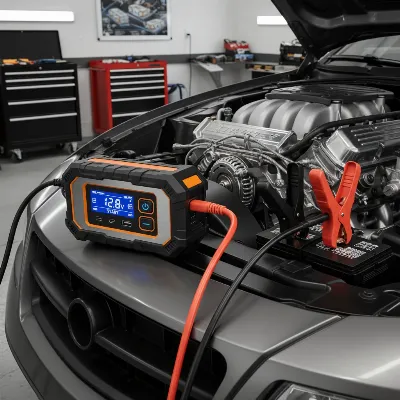
Imagine the scenario: you’re facing a dead car battery, reaching for your trusty portable jump starter, only to discover it’s as lifeless as your car. It’s a frustrating and often unexpected situation, leaving you stranded and questioning the reliability of your emergency tool. A portable jump starter is an invaluable device for any vehicle owner, offering peace of mind and independence from needing another vehicle to get back on the road. But like any battery-powered device, it can fall victim to deep discharge, improper storage, or simply age, eventually appearing “dead.” This comprehensive guide will walk you through the diagnostic process, offer safe and effective revival techniques, and, crucially, provide expert advice on preventing your portable jump starter battery from failing in the first place.
Understanding Your Portable Jump Starter’s Battery
Portable jump starters are designed to deliver a powerful burst of energy to a dead car battery, but their internal power sources vary. Most modern jump starters use lithium-ion batteries, specifically Lithium Polymer (LiPo) or Lithium Iron Phosphate (LiFePO4) chemistries, known for their compact size, lighter weight, and efficient power delivery. Older or more heavy-duty units might still rely on sealed lead-acid (SLA) batteries, which are robust but heavier and more susceptible to damage from deep discharge.
Batteries in jump starters “die” for several common reasons. A primary culprit is deep discharge, where the battery’s voltage drops below a safe threshold, often due to prolonged inactivity or being left connected to a parasitic draw. For lithium-ion batteries, a sophisticated Battery Management System (BMS) protects the cells by entering a “sleep mode” or low-voltage cut-off when voltage gets too low, preventing irreversible damage. However, if left in this state for too long or discharged too severely (e.g., below 2.0-2.5V per cell for lithium-ion), the damage can become permanent. Other factors include exposure to extreme temperatures, using an incompatible charger, loose internal connections, or simply the natural aging process, which degrades battery capacity over time. Signs of a dead jump starter typically include a complete lack of indicator lights, refusal to accept a charge, or an inability to deliver sufficient cranking power.
Essential Tools for Diagnosis and Revival
Before attempting to revive a seemingly dead portable jump starter, gathering the right tools is crucial. These tools will help you diagnose the problem accurately and perform revival steps safely.
- Digital Multimeter: An indispensable tool for measuring voltage, resistance, and continuity. It’s vital for checking the battery’s current voltage and assessing charger output.
- Compatible Smart Battery Charger (with Recovery Mode): Many modern lithium-ion chargers feature a “wake-up,” “boost,” or “0V charging” function. These are designed to safely deliver a low, controlled current to deeply discharged batteries, gradually raising their voltage until the internal BMS can reactivate.
- Another Fully Charged Battery: This could be a healthy car battery or another functional portable jump starter. It will be used for a brief “jump-start” method to provide a voltage boost to the ailing unit.
- Safety Gear: Always prioritize safety. Wear insulated gloves and safety glasses when working with batteries to protect against potential sparks, short circuits, or chemical exposure.
- Basic Hand Tools: A screwdriver set for opening the jump starter’s casing (if required for inspection), a wire brush or battery terminal cleaner for addressing corrosion, and insulated alligator clip leads can also be very helpful.
Having these tools on hand will empower you to systematically troubleshoot and potentially restore your jump starter, ensuring you’re prepared for any unexpected car battery issues. Always consult your jump starter’s user manual for specific instructions and warnings related to your model.
Step-by-Step Guide to Diagnosing a Dead Jump Starter
A thorough diagnosis is the first and most critical step when your portable jump starter appears dead. Rushing into revival attempts without understanding the root cause can be ineffective or even dangerous.
Visual Inspection for Obvious Issues
|
Our Picks for the Best Jump Starter in 2026
As an Amazon Associate I earn from qualifying purchases.
|
||
| Num | Product | Action |
|---|---|---|
| 1 | Tire Inflator Portable Air Compressor, 12V Car Jump Starter, 150PSI & 28000mAh Air Pump with Air Blower, Digital Pressure Gauge and LED Light, Electric Air Pump for Car, Motorcycle, Balls, Bike Pump |

|
| 2 | NOCO Boost X GBX155: 4250A UltraSafe Jump Starter – 12V Lithium Battery Booster Pack, Portable Jump Box, Power Bank & Jumper Cables - for 10.0L Gas and 8.0L Diesel Engines |
|
| 3 | Tire Inflator Portable Air Compressor & Car Jump Starter, Cordless Air Pump with LED Light & Pressure Gauge for Auto,Motorcycles,Bikes,Balls. |
|
| 4 | Roar Pedal Super Capacitor Jump Starter, No Need Pre-Charge No Battery 12V Portable Car Jump Starter for All 12V Gas and Diesel Car, Portable Jump Box with Display |
|
| 5 | KeenPower 6000A Super Capacitor Battery-Less Jump Starter, Built-in 6 * 3000F Supercapacitor, No Traditional Battery |
|
| 6 | Portable Car Jump Starter with Air Compressor for Emergencies,3000A Peak and 150 PSI Max,for 12L Gas & 10L Diesel Engines,LCD Display,LED Light |
|
| 7 | ANCEL BS200 Super Starter - Permanent Connected Starting System with Super Capacitor, Car Battery Jump Booster & Health Monitor via App, -40℉~176℉ in-Cabin Jump Box for 3.0L Vehicles |
|
| 8 | NOCO Boost X GBX55: 1750A UltraSafe Jump Starter – 12V Lithium Battery Booster Pack, Portable Jump Box, Power Bank & Jumper Cables - for 7.5L Gas and 5.0L Diesel Engines |
|
| 9 | Tire Inflator Portable Air Compressor with Digitally Display Pressure Gauge 20000mA, Car Air Compressor Pump with Jump Starter 150PSI, 14.8 V Car Battery Jump Starter Portable |
|
| 10 | Jump Starter with Air Compressor, 6000A 150PSI Car Battery Jump Starter (10.0 Gas/8.0L Diesel) Battery Jumper Starter Portable 12V Jump Box with Jumper Cables, LED Light, LED Display |
|
Start with a careful visual examination of your jump starter. Look for any signs of physical damage such as cracks, bulges in the casing (a significant red flag for lithium-ion batteries indicating internal failure), or fluid leaks. Inspect the charging port for bent pins, debris like dust or lint, or corrosion that might prevent a solid connection. Run your fingers along all the cables and clamps, checking for fraying, cuts, or damaged insulation. Pay close attention to the battery terminals (on the clamps and potentially visible inside the unit) for any white or greenish powdery corrosion, which can severely block electrical flow. A flickering charging indicator when wiggling the cable often points to an intermittent connection issue.
Check Connections
Loose connections are a surprisingly common and easily fixable problem. Ensure that the charging cable is securely plugged into both the jump starter and the power outlet. If you’re comfortable and your jump starter’s design allows, carefully open the casing to check for loose internal battery connections. Tighten any terminals that can be rotated by hand, as a loose positive terminal is a frequent culprit for charging issues. Always disconnect the jump starter from any power source before opening its casing.
Test the Charger
The charger itself might be the problem, not the jump starter. First, try plugging your jump starter’s charger into a different power outlet that you know is working to rule out a faulty wall socket. If you have access to an alternative, compatible charger, try using it to see if the jump starter begins charging. With a multimeter, you can also test the output voltage of your original charger. It should match the voltage rating printed on the charger itself. If the output voltage is zero or significantly off, the charger is likely faulty and needs replacement.
Measure Battery Voltage
Using a multimeter, carefully measure the voltage of your jump starter’s internal battery. This step is crucial for determining the extent of the discharge. For a 12V lead-acid jump starter, a voltage below approximately 10V-10.5V is considered deeply discharged. For lithium-ion jump starters, individual cell voltage is critical; generally, anything below 2.5V-3.0V per cell indicates a deep discharge, and below 2.0V per cell suggests potential irreversible damage. A very low reading (e.g., 0V or close to it) means the battery is truly dead or its BMS has completely shut it down. If the voltage is low but not critically so, your battery might just be in a “sleep mode” and potentially recoverable.
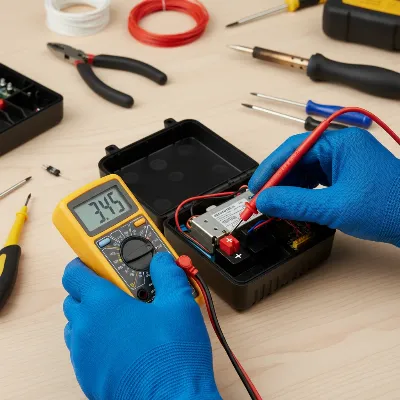 An expert technician using a multimeter to diagnose a portable jump starter battery, showing voltage reading on the screen.
Safe Methods to Revive a Deeply Discharged Portable Jump Starter Battery
Once you’ve diagnosed the issue and determined that your jump starter battery isn’t irreversibly damaged, you can attempt revival using specific, cautious methods. Remember, safety is paramount.
The Low Current “Trickle Charge” Method
This is often the safest and most recommended approach for lithium-ion batteries in “sleep mode” where the BMS has cut off charging due to low voltage. A standard charger might not recognize such a low voltage, but a smart charger with a dedicated “recovery,” “boost,” or “0V charging” mode can bypass this.
- Explanation: The trickle charge method involves applying a very low, controlled current to the deeply discharged battery. This gradually and gently raises the battery’s voltage until it reaches a safe level that the internal Battery Management System (BMS) can recognize and activate, allowing normal charging to resume.
- How to: Connect your jump starter to a smart charger specifically designed for lithium-ion batteries that includes a recovery function. Select the appropriate recovery or “wake-up” mode. The charger will then slowly deliver a small current to the battery.
- Monitoring: During this process, it is absolutely critical to constantly monitor the battery. Check for any signs of heat buildup, swelling, or unusual odors. If you notice any of these, immediately disconnect the charger, as it indicates a serious internal problem that could lead to fire or explosion. Continue monitoring until the battery’s voltage rises to a point where the regular charging cycle can begin.
> “Never rush a deeply discharged battery. A slow, controlled charge is your best friend for revival. Patience and constant monitoring are key to preventing further damage.” – John Smith, Certified Automotive Technician
Jump-Starting the Jump Starter Battery
This method is more advanced and requires extreme caution, as it involves briefly connecting the “dead” jump starter to a healthy, fully charged battery to give it a temporary voltage boost. It’s essentially a way to “shock” the BMS back into action.
- When Applicable: This technique is used when a lithium-ion jump starter is in a deep “sleep mode” and even a smart charger’s recovery function struggles to initiate. The goal is to provide just enough voltage to re-engage the BMS.
- How to:
- Ensure both the dead jump starter and the healthy battery (e.g., a car battery or another jump starter) are switched off.
- Using heavy-duty, insulated jumper cables, connect the positive (+) terminal of the healthy battery to the positive (+) terminal of the dead jump starter.
- Connect the negative (-) terminal of the healthy battery to the negative (-) terminal of the dead jump starter.
- Allow the connection to remain for a very brief period, typically 10-30 seconds. The aim is not to fully charge the battery, but to provide a voltage spike.
- Immediately disconnect the cables in reverse order: negative first, then positive.
- After this brief boost, try connecting your jump starter to its regular charger. It should now recognize the battery and begin a normal charging cycle.
- Safety Precautions: Always ensure correct polarity (positive to positive, negative to negative) to avoid severe damage to both batteries and potential hazards. Use well-insulated jumper cables to prevent accidental short circuits. Do not leave the batteries connected for too long, as this can overcharge the dead battery and cause damage or overheating.
Resetting the Battery Management System (BMS)
Many lithium-ion jump starters are equipped with a BMS that acts as a protective circuit. If the battery experiences an anomaly (like extreme discharge, overcharge, or short circuit), the BMS might enter a protection mode, making the battery seem unresponsive. Resetting it can sometimes resolve the issue.
- Why: The BMS can lock out charging to prevent further damage when it detects unsafe voltage levels. A reset might clear this protective lockout.
- How to:
- Simple Reset: Disconnect the jump starter from its charger and any connected devices. Many manufacturers recommend pressing and holding the power button for 10-15 seconds. Then, reconnect a known-good charger and see if it starts charging.
- Internal Reset Button: Some advanced units may have a small, recessed reset button (often a pinhole) located near the charging port. Consult your manual to see if your model has one and how to use it (usually requires a paperclip or sim ejector tool).
- Terminal Disconnection: For some models, especially those with easily accessible internal components, disconnecting the battery terminals for a few minutes (after ensuring no residual charge is present) can reset the BMS. Only attempt this if you are confident and knowledgeable about electronics, and always disconnect from power first.
After performing any of these revival methods, monitor the jump starter carefully during its subsequent charging cycles. If it still refuses to charge, overheats, or shows signs of swelling, it might be beyond repair.
When to Call It Quits: Irreversible Damage and Replacement
While it’s often possible to revive a portable jump starter battery, there are clear signs that indicate irreversible damage, making further attempts unsafe and futile. Knowing when to replace your jump starter is crucial for both safety and practical reasons.
Signs of Permanent Damage
- Battery Swelling or Bulging: This is the most critical and dangerous sign, especially in lithium-ion batteries. Swelling indicates that gases are building up internally due to chemical reactions, often from overcharging, deep discharge, or manufacturing defects. A swollen battery is a high risk for fire or explosion.
- Leaking Fluids: Any electrolyte leakage from the battery casing is a sign of severe internal damage. The corrosive fluid can cause harm and signals that the battery is no longer contained safely.
- Excessive Heat During Charging: While some warmth is normal during charging, if the jump starter becomes unusually hot to the touch, it indicates an internal fault or short circuit. This poses a significant fire hazard.
- Zero Voltage Even After Multiple Revival Attempts: If, after trying various safe revival methods, your multimeter consistently reads 0V, or the voltage remains critically low, the battery cells are likely chemically damaged beyond recovery.
- Smoke or Unusual Odors: Any smoke, burning smell, or strong chemical odor immediately signals a dangerous internal fault. Disconnect from power and move to a safe, well-ventilated area.
Why These are Dangerous
Attempting to revive or use a battery exhibiting any of these signs is extremely hazardous. Such batteries are unstable and can ignite, explode, or release toxic fumes, posing serious risks of injury and property damage. Your safety should always be the top priority.
Recommendation: Safely Dispose and Replace
If your portable jump starter battery shows any of these irreversible damage indicators, the safest course of action is to immediately discontinue use and safely dispose of it according to local regulations. Do not throw it in regular household trash, as batteries contain hazardous materials. Look for battery recycling centers or specialized electronic waste disposal facilities in your area.
Once safely disposed of, it’s time to invest in a new, reliable portable jump starter. Consider models with advanced safety features, robust battery chemistry (like LiFePO4), and a strong warranty to ensure long-term performance and peace of mind.
Preventing Future Jump Starter Battery Failure
The best way to ensure your portable jump starter is ready when you need it most is through proactive maintenance and proper usage. Prevention is always easier and safer than revival.
Regular Charging Practices
- Keep it Charged: Unlike older lead-acid batteries that preferred full discharge cycles, modern lithium-ion batteries prefer to be kept partially charged. Avoid letting your jump starter sit fully discharged for extended periods. Most manufacturers recommend charging it every 3-6 months, even if unused.
- Top-Off After Use: Always recharge your jump starter immediately after each use, regardless of how much power was drawn. This ensures it’s ready for the next emergency and prevents it from falling into a deeply discharged state.
Proper Storage
- Optimal Charge Level: For long-term storage, especially for lithium-ion batteries, aim for a charge level between 50% to 80%. Storing a battery at 100% or 0% charge for prolonged periods can accelerate degradation.
- Cool, Dry Environment: Store your jump starter in a cool, dry place away from direct sunlight, extreme temperatures, and high humidity. Extreme heat or cold can significantly impact battery health and capacity. Avoid leaving it in a hot car for extended periods.
- Disconnect Unnecessary Devices: If your jump starter has USB ports or other output functions, ensure no devices are left connected when not in use. Even a small parasitic draw can slowly drain the battery over time.
Maintenance and Inspection
- Clean Terminals and Cables: Regularly inspect the clamps and cables for corrosion, dirt, or damage. Clean any corrosion with a wire brush or a baking soda and water solution (for lead-acid terminals) to ensure optimal conductivity.
- Check for Physical Damage: Periodically inspect the casing for any cracks, swelling, or signs of wear and tear. Early detection of physical issues can prevent more serious problems.
Using Compatible Chargers
- Always Use the Manufacturer-Recommended Charger: Using an incompatible or low-quality charger can damage the battery, lead to inefficient charging, or even pose a safety risk. The manufacturer’s charger is designed to deliver the correct voltage and current for your specific battery chemistry.
- Avoid Overcharging: While modern smart chargers often have overcharge protection, it’s still good practice to unplug your jump starter once it’s fully charged, especially if you’re using a basic charger without advanced features.
By following these preventive measures, you can significantly extend the lifespan of your portable jump starter battery, ensuring it’s always ready to provide that critical boost when your vehicle needs it most.
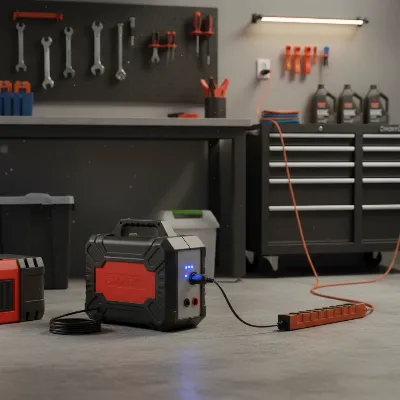 A portable jump starter being properly charged in a garage setting, emphasizing preventive maintenance.
Portable Jump Starter – Frequently Asked Questions
Is it safe to try and revive any dead portable jump starter battery?
No, it is not always safe. You should never attempt to revive a jump starter battery that shows signs of physical damage such as swelling, leaking, or excessive heat during attempted charging, as these indicate irreversible and dangerous internal faults. In such cases, the battery should be safely disposed of.
How do I know if my jump starter has a lithium-ion or lead-acid battery?
Most modern, compact, and lightweight jump starters use lithium-ion batteries. Heavier, bulkier units often contain lead-acid batteries. The easiest way to confirm is to check the product’s specifications, its user manual, or any labels on the device itself.
What is “sleep mode” for a lithium jump starter battery?
“Sleep mode” refers to a protective state where a lithium-ion battery’s Battery Management System (BMS) shuts off charging and discharging to prevent damage from deep discharge. The battery isn’t truly dead, but its voltage is too low for standard chargers to recognize it, requiring a low-current “wake-up” charge.
How often should I charge my portable jump starter if it’s not being used?
For lithium-ion jump starters, it’s generally recommended to recharge them every 3-6 months, keeping them between 50-80% charge for long-term storage. Lead-acid jump starters may require more frequent charging, typically every 1-2 months, as they are more prone to self-discharge and damage when left at low charge.
Can cold weather kill my jump starter battery?
Extreme cold can significantly reduce a battery’s performance and capacity. While it may not “kill” a healthy battery, prolonged exposure to freezing temperatures can accelerate degradation, make charging difficult, and prevent the battery from delivering its full power. It’s best to store jump starters in a temperate environment.
Conclusion
A portable jump starter is an essential tool for any driver, offering crucial assistance when your vehicle’s battery fails. While encountering a “dead” jump starter can be alarming, understanding the underlying causes and knowing how to diagnose and safely attempt revival can save you from unnecessary expense and frustration. From gentle trickle charging to carefully resetting the BMS, many issues can be resolved. However, recognizing the signs of irreversible damage, such as swelling or excessive heat, is paramount for safety, dictating when it’s time to responsibly dispose of the old unit and invest in a new one. By committing to regular charging, proper storage, and routine maintenance, you can ensure your portable jump starter remains a reliable lifesaver for years to come. What are your most trusted tips for keeping your jump starter in peak condition?