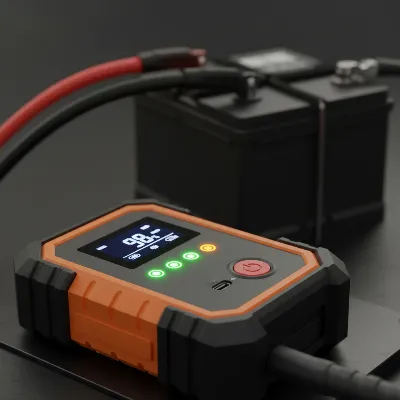
A dead car battery can disrupt your day, leaving you stranded at the most inconvenient times. Fortunately, portable jump starters offer a quick and effective solution, allowing you to revive your vehicle’s battery without the need for another car. These compact devices have become indispensable tools for drivers, providing peace of mind and independence on the road. However, knowing how to use a portable jump starter safely and correctly is paramount to prevent damage to your vehicle’s electrical system and ensure your personal safety. This comprehensive guide will walk you through everything you need to know, from selecting the right device to mastering safe operation and essential maintenance, ensuring you’re always prepared for the unexpected.
Portable Jump Starters: Your Essential Roadside Companion
A portable jump starter is a self-contained battery pack designed to deliver a burst of power to a vehicle’s drained battery, enabling the engine to crank and start. Unlike traditional jumper cables that require a second vehicle, these devices offer standalone functionality, making them incredibly convenient for emergencies, especially when alone or in remote areas.
The market offers several types of jump starters, each with distinct characteristics:
- Lithium-ion Jump Starters: These are typically compact, lightweight, and highly portable, often fitting into a glove compartment. They deliver impressive power for their size and maintain a charge for extended periods. Their smaller footprint and advanced safety features, such as spark-proof technology and reverse polarity protection, make them a popular choice for most passenger vehicles.
- Lead-Acid Jump Starters: Historically, these were the standard. They are larger, heavier, and often resemble a small battery box. While they can deliver high peak amperage, suitable for larger engines like trucks and SUVs, they tend to lose charge faster and require more frequent maintenance.
- Ultracapacitor Jump Starters: A newer technology, ultracapacitor models charge extremely quickly, often in minutes, by drawing a small charge from the nearly dead battery itself or a minimal power source. They boast an exceptionally long cycle life, making them very durable, though they might be less common and potentially more expensive.
Guide to Choosing the Right Portable Jump Starter
Selecting the ideal portable jump starter involves understanding key specifications and features to match it with your vehicle’s needs and your personal preferences.
Capacity and Peak Amps: Powering Your Engine
Two critical specifications determine a jump starter’s capability:
- Capacity (mAh/Wh): While sometimes expressed in milliampere-hours (mAh) for lithium-ion units or watt-hours (Wh), this indicates the overall energy storage. For jump starters, a higher capacity generally means more jump starts per charge and potentially longer standby time. At least 10,000 mAh is often recommended for reliable performance.
- Peak Amps: This represents the maximum current the device can deliver in an instant, crucial for turning over a stubborn engine. The required peak amperage depends heavily on your vehicle’s engine size and type:
- Small cars, motorcycles, 4-cylinder engines (under 3.0 liters): 400 to 600 peak amps.
- Mid-size sedans, SUVs, V6 engines (up to 4.0 liters): 600 to 1000 peak amps.
- Large SUVs, diesel trucks, V8 engines (over 5.0 liters): 1000 amps or more.
- In colder climates, you might need a higher rating as batteries perform less efficiently. Always consult your vehicle’s owner’s manual or a trusted mechanic for specific recommendations.
|
Our Picks for the Best Jump Starter in 2026
As an Amazon Associate I earn from qualifying purchases.
|
||
| Num | Product | Action |
|---|---|---|
| 1 | Roar Pedal Super Capacitor Jump Starter, No Need Pre-Charge No Battery 12V Portable Car Jump Starter for All 12V Gas and Diesel Car, Portable Jump Box with Display |

|
| 2 | Tire Inflator Portable Air Compressor with Digitally Display Pressure Gauge 20000mA, Car Air Compressor Pump with Jump Starter 150PSI, 14.8 V Car Battery Jump Starter Portable |
|
| 3 | NOCO Boost X GBX55: 1750A UltraSafe Jump Starter – 12V Lithium Battery Booster Pack, Portable Jump Box, Power Bank & Jumper Cables - for 7.5L Gas and 5.0L Diesel Engines |
|
| 4 | Portable Car Jump Starter with Air Compressor for Emergencies,3000A Peak and 150 PSI Max,for 12L Gas & 10L Diesel Engines,LCD Display,LED Light |
|
| 5 | Jump Starter with Air Compressor, 6000A 150PSI Car Battery Jump Starter (10.0 Gas/8.0L Diesel) Battery Jumper Starter Portable 12V Jump Box with Jumper Cables, LED Light, LED Display |
|
| 6 | ANCEL BS200 Super Starter - Permanent Connected Starting System with Super Capacitor, Car Battery Jump Booster & Health Monitor via App, -40℉~176℉ in-Cabin Jump Box for 3.0L Vehicles |
|
| 7 | Tire Inflator Portable Air Compressor, 12V Car Jump Starter, 150PSI & 28000mAh Air Pump with Air Blower, Digital Pressure Gauge and LED Light, Electric Air Pump for Car, Motorcycle, Balls, Bike Pump |
|
| 8 | KeenPower 6000A Super Capacitor Battery-Less Jump Starter, Built-in 6 * 3000F Supercapacitor, No Traditional Battery |
|
| 9 | Tire Inflator Portable Air Compressor & Car Jump Starter, Cordless Air Pump with LED Light & Pressure Gauge for Auto,Motorcycles,Bikes,Balls. |
|
| 10 | NOCO Boost X GBX155: 4250A UltraSafe Jump Starter – 12V Lithium Battery Booster Pack, Portable Jump Box, Power Bank & Jumper Cables - for 10.0L Gas and 8.0L Diesel Engines |
|
Battery Type: Lithium-ion vs. Lead-Acid
The type of internal battery significantly influences the jump starter’s performance, size, and maintenance:
- Lithium-ion:
- Pros: Extremely compact and lightweight, longer lifespan (5-7 years with proper care), maintains charge for months, performs better in cold weather, often includes advanced safety features like spark-proof and reverse polarity protection.
- Cons: Typically more expensive, can be sensitive to extreme heat if not properly managed.
- Lead-Acid:
- Pros: Generally more affordable, robust for high peak amp delivery, proven technology.
- Cons: Much heavier and bulkier, shorter lifespan (2-3 years), quicker self-discharge rate, less efficient in cold temperatures, often lacks modern safety features inherent in lithium units.
Essential Safety and Supplemental Features
Modern portable jump starters often come equipped with a range of features that enhance safety and utility:
- Spark-Proof Clamps and Reverse Polarity Protection: These are vital safety mechanisms that prevent sparking if the clamps accidentally touch or are connected incorrectly, protecting both the user and the vehicle’s electronics.
- Built-in Flashlight: An LED flashlight is highly useful for nighttime roadside emergencies, often including SOS and strobe modes for signaling.
- USB Charging Ports: Many units double as power banks, allowing you to charge phones, tablets, and other portable devices.
- LCD Display/Battery Indicator: Provides clear information on the jump starter’s charge level and operational status.
- 12V DC Outlet: Some larger units include a 12-volt outlet, which can power accessories like portable air compressors or coolers.
- Integrated Air Compressor: A highly practical feature for reinflating tires, combining two essential roadside tools into one.
- Override Button: For extremely dead batteries, an override feature can provide an extra surge of power.
Prioritize safety features first, then consider additional functionalities that align with your specific needs.
Brands and Price Points
Reputable brands in the jump starter market include NOCO, Clore Automotive, GOOLOO, and Schumacher, among others. Prices vary widely based on power, features, and brand prestige, ranging from budget-friendly options under $100 to professional-grade units costing several hundred dollars. Investing in a trusted brand often translates to better reliability, safety, and customer support.
Top Portable Jump Starters: A Comparative Look
When evaluating jump starters, key factors include peak amperage, battery type, and safety features. Many highly-rated models offer versatile solutions for various vehicle types. For example, some units provide 1,000 to 2,000 peak amps, suitable for most gas and smaller diesel engines, often with IP65 water resistance and advanced safety protections like spark-proof clamps and reverse polarity. Others might boast higher peak amperages (e.g., 3,000-5,000 amps) for larger engines, while integrating features like air compressors, multiple USB ports, and robust casings for durability. The ideal choice balances sufficient power for your vehicle with a portable design and essential safety mechanisms.
> “A portable jump starter is a small investment that can save you significant time and stress. Always match the device’s capabilities to your vehicle’s engine size, and never compromise on safety features.” – Liam Davies, Automotive Systems Engineer
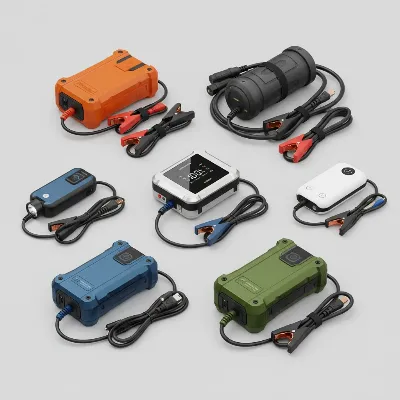 Comparing different portable jump starter models for cars, highlighting their features and sizes
How to Use a Portable Jump Starter Safely and Effectively
Using a portable jump starter is straightforward, but adhering to the correct sequence and safety precautions is crucial.
Before You Begin:
- Read Your Manual: Always consult your jump starter’s and vehicle’s owner’s manuals for specific instructions and warnings.
- Charge Your Device: Ensure your portable jump starter is fully charged. A weak unit may not provide enough power.
- Safety Gear: Consider wearing safety gloves and eye protection to guard against potential sparks or battery acid.
- Vehicle Preparation:
- Park your vehicle on a flat, stable surface and engage the parking brake.
- Turn off the engine and all electrical accessories (lights, radio, air conditioning, phone chargers).
- Remove the keys from the ignition.
- Locate your car battery. It’s usually under the hood but can sometimes be in the trunk or under the back seat. Consult your vehicle’s manual if unsure.
- Inspect the battery: Never attempt to jump start a cracked, leaking, or frozen battery. Seek professional help instead.
Step-by-Step Connection and Start:
- Connect the Red Clamp: Attach the red (positive, +) clamp from the jump starter to the positive (+) terminal of your car battery. Ensure a secure connection, free from corrosion.
- Connect the Black Clamp: Attach the black (negative, -) clamp from the jump starter to the negative (-) terminal of your car battery. For some vehicles, especially older ones, or if your jump starter manual specifies, connect the black clamp to a clean, unpainted metal part of the engine block or chassis, away from moving parts, fuel lines, and the battery itself, to create a ground. This helps to dissipate any potential sparks away from the battery’s volatile gases.
- Activate the Jump Starter: Turn on your portable jump starter. Many modern units have a ‘boost’ or ‘on’ button. Look for indicator lights confirming a successful connection and ready status.
- Start Your Vehicle: Get into your car and try to start the engine. If it doesn’t start immediately, wait a minute (or as recommended by your jump starter’s manual) before trying again. Do not crank the engine for more than a few seconds at a time to prevent overheating the starter motor.
- Engine Running: Once the engine starts, let it run for a few minutes (e.g., 5-10 minutes) to allow your alternator to begin recharging the battery.
Safe Disconnection:
Disconnecting the jump starter in the correct order is just as important as connecting it properly to avoid sparks and potential damage.
- Turn Off the Jump Starter: Deactivate the portable jump starter.
- Remove the Black Clamp: Carefully remove the black (negative, -) clamp first from the car battery’s negative terminal or the metal ground point.
- Remove the Red Clamp: Next, remove the red (positive, +) clamp from the car battery’s positive (+) terminal.
- Store the Device: Safely stow your jump starter in its carrying case.
After successfully jump-starting, keep your car running for at least 15-20 minutes, or drive it for a while, to allow the alternator to recharge the battery sufficiently. If your battery repeatedly dies, it might be time for a professional inspection or replacement.
Tips and Tricks for Jump Starter Use
Maximizing the effectiveness and longevity of your portable jump starter involves a few smart practices:
- Pre-Charge Test: Before heading out on a long trip, especially in extreme weather, perform a quick check to ensure your jump starter is fully charged. There’s nothing worse than needing a jump and finding your device dead.
- Clean Terminals: Corroded battery terminals can impede current flow. Keep them clean for optimal conductivity, using a wire brush if necessary.
- Cold Weather Performance: In extremely cold conditions, batteries lose efficiency. A fully charged, high-amperage jump starter is even more critical. Some lithium jump starters have specific cold-weather boost modes.
- Don’t Force It: If your car doesn’t start after a few attempts, stop and investigate. There might be a deeper issue than just a dead battery. Continuing to crank could damage your starter motor or the jump starter itself.
- Hybrid and EV Caution: While you can use a jump starter on most hybrid and electric vehicles, it’s only for their 12-volt auxiliary battery, not the high-voltage drivetrain battery. Always check your vehicle’s owner’s manual before attempting this.
Maintaining Your Portable Jump Starter for Longevity
Proper maintenance ensures your jump starter remains ready for action whenever you need it.
- Regular Recharging: This is the most crucial maintenance step. Lithium-ion jump starters should ideally be recharged every 3 to 6 months, or after every use, to maintain optimal battery health. Avoid letting the unit sit fully discharged for extended periods, as this can damage the internal battery.
- Proper Storage: Store your jump starter in a cool, dry place, away from direct sunlight, extreme temperatures, and moisture. Avoid storing it in a vehicle for prolonged periods in very hot or very cold weather, as this can degrade the battery.
- Inspect Cables and Clamps: Periodically check the jumper cables and clamps for any signs of damage, fraying, cracks, or corrosion. Damaged cables can be hazardous and inefficient.
- Keep it Clean: Wipe down the unit and cables with a dry cloth to remove dirt, dust, and debris. Ensure the clamps are clean and free of rust or residue for a good connection.
- Consult the Manual: Always refer to your jump starter’s specific user manual for its recommended maintenance schedule and storage guidelines.
Portable Jump Starter – Frequently Asked Questions
How often should I recharge my portable jump starter?
You should recharge your portable jump starter every three to six months, even if it hasn’t been used, to maintain optimal battery health. Additionally, recharge it fully after every use to ensure it’s ready for the next emergency.
Can I leave my portable jump starter connected to my car battery overnight?
No, you should never leave a portable jump starter connected to your car battery overnight. Jump starters are designed for temporary power boosts, and prolonged connection can overcharge or damage your car’s battery, or drain the jump starter itself.
What should I do if my car doesn’t start after using a portable jump starter?
If your car doesn’t start after following the jump-starting steps, first ensure the jump starter is fully charged and connections are secure. If it still fails, the problem might be more complex than a dead battery, possibly involving the starter motor, alternator, or another electrical issue, and professional diagnosis is recommended.
Is it safe to use a portable jump starter in the rain or wet conditions?
It is generally not recommended to use a portable jump starter in the rain or wet conditions due to the risk of electrical shock or short-circuiting. Always try to move your vehicle to a dry, safe location or wait for better weather before attempting a jump start.
Conclusion
A portable jump starter is an invaluable tool for any car owner, offering independence and peace of mind when facing a dead battery. By understanding the different types available, choosing a model suited for your vehicle’s needs, and meticulously following safe usage and maintenance procedures, you can confidently navigate unexpected roadside predicaments. Remember, safety should always be your top priority during a jump start. With the right knowledge and a well-maintained device, you’ll be prepared for anything the road throws your way. Are you ready to make a portable jump starter an essential part of your vehicle’s emergency kit?