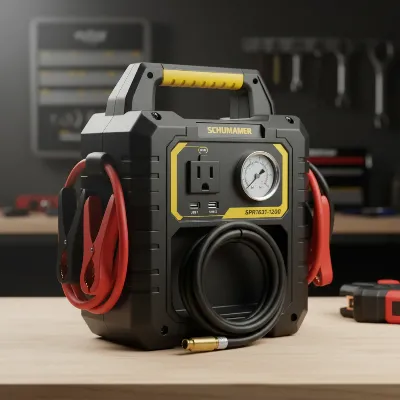
A dead car battery can derail your day, leaving you stranded and frustrated. Whether you’re rushing to work, embarking on a road trip, or simply running errands, a non-starting vehicle is a major inconvenience. In such moments, a reliable portable jump starter becomes an indispensable tool, transforming a stressful situation into a minor hiccup. Among the many options available, the Halo Bolt Portable Jump Starter has emerged as a popular choice for its multifunctionality and promise of dependable performance. This comprehensive review will delve into the quality and real-world capabilities of the Halo Bolt, helping you understand if it’s the ultimate emergency gadget your vehicle needs. We’ll explore its features, put its power to the test, and provide insights to guide your decision-making process.
Jump Starter: An Essential Solution for Vehicle Emergencies
For decades, the standard solution for a dead car battery involved a second vehicle and cumbersome jumper cables. While effective, this method often required relying on the kindness of strangers or waiting for roadside assistance. The advent of portable jump starters has revolutionized roadside assistance, offering drivers an autonomous and immediate solution. These compact devices pack enough power to crank a dead engine back to life, all without the need for another car.
Portable jump starters typically fall into two main categories: battery-powered and supercapacitor models. Battery-powered jump starters, like the Halo Bolt, utilize internal rechargeable batteries (most commonly lithium-ion or lithium polymer) to deliver a surge of power. They require pre-charging but can hold a charge for extended periods and often offer additional functionalities. Supercapacitor models, on the other hand, draw a small residual charge from the dead battery itself to rapidly build up the necessary power, making them almost instantly ready for use. Both types aim to provide a convenient, safer, and often more robust alternative to traditional jumper cables, ensuring you’re never truly stranded.
Halo Bolt Portable Jump Starter: A Comprehensive Quality Test and Review
The Halo Bolt Portable Jump Starter consistently earns high marks in various independent tests and user reviews, often being lauded as a top-tier choice for its reliability and versatility. Its reputation stems from its ability to not only jump-start a wide array of vehicles but also to serve as a portable power bank for electronic devices and, in some models, an air compressor. This multifunctionality makes it a true emergency essential for any driver.
During quality tests, the Halo Bolt has demonstrated impressive jump-starting capabilities across diverse scenarios. Testers successfully used it to revive dead batteries in large SUVs, marine vessels, and even RVs, often on the first attempt. One real-world test involved jumping a Chevy Tahoe, an RV battery, and a boat engine, with the Halo Bolt performing flawlessly in all instances. Another test confirmed its ability to jump-start a 5.4L V8 Triton Engine on a Ford Econoline with a completely dead battery. These practical applications underscore its robust power output and reliable performance in critical moments.
Beyond its primary function, the Halo Bolt stands out for its integrated features. Many models, such as the Halo Bolt Air, include a built-in air compressor, allowing you to inflate tires on the go—a feature highly valued by users. It also comes equipped with multiple USB ports, transforming it into a powerful portable charger for smartphones, tablets, and other electronic gadgets. A bright LED flashlight with an SOS mode is another practical addition, providing crucial illumination and emergency signaling. Its compact and relatively lightweight design ensures it can be conveniently stored in a glovebox, trunk, or even a seatback pocket, making it readily accessible whenever needed.
However, like any product, the Halo Bolt has a few minor considerations. The air compressor hose on some models has been noted as somewhat short, and using the compressor can significantly drain the unit’s battery. While the jumper cables are robust, their length is also fairly standard for portable units, which might require careful positioning of the device. Despite these minor points, the overwhelmingly positive feedback regarding its overall quality and the responsiveness of its customer service, including quick replacements for faulty components, solidifies its standing as a highly recommended emergency tool.
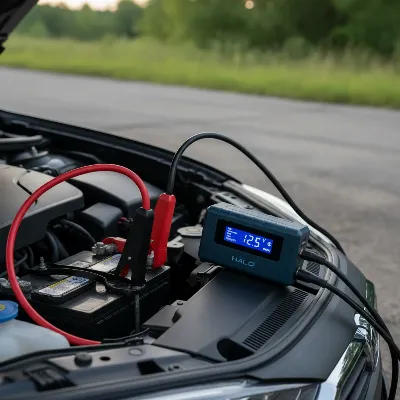 Halo Bolt Portable Jump Starter connected to a car battery for a jump start, illustrating its compact design and ease of use.
Choosing the Right Jump Starter for Your Needs
Selecting the ideal jump starter involves more than just picking the first one you see. Several critical factors should influence your decision to ensure the device meets your specific vehicle requirements and provides the functionality you need in an emergency.
Capacity and Peak Amps
|
Our Picks for the Best Jump Starter in 2026
As an Amazon Associate I earn from qualifying purchases.
|
||
| Num | Product | Action |
|---|---|---|
| 1 | Tire Inflator Portable Air Compressor, 12V Car Jump Starter, 150PSI & 28000mAh Air Pump with Air Blower, Digital Pressure Gauge and LED Light, Electric Air Pump for Car, Motorcycle, Balls, Bike Pump |

|
| 2 | Jump Starter with Air Compressor, 6000A 150PSI Car Battery Jump Starter (10.0 Gas/8.0L Diesel) Battery Jumper Starter Portable 12V Jump Box with Jumper Cables, LED Light, LED Display |
|
| 3 | ANCEL BS200 Super Starter - Permanent Connected Starting System with Super Capacitor, Car Battery Jump Booster & Health Monitor via App, -40℉~176℉ in-Cabin Jump Box for 3.0L Vehicles |
|
| 4 | Tire Inflator Portable Air Compressor & Car Jump Starter, Cordless Air Pump with LED Light & Pressure Gauge for Auto,Motorcycles,Bikes,Balls. |
|
| 5 | KeenPower 6000A Super Capacitor Battery-Less Jump Starter, Built-in 6 * 3000F Supercapacitor, No Traditional Battery |
|
| 6 | NOCO Boost X GBX155: 4250A UltraSafe Jump Starter – 12V Lithium Battery Booster Pack, Portable Jump Box, Power Bank & Jumper Cables - for 10.0L Gas and 8.0L Diesel Engines |
|
| 7 | Tire Inflator Portable Air Compressor with Digitally Display Pressure Gauge 20000mA, Car Air Compressor Pump with Jump Starter 150PSI, 14.8 V Car Battery Jump Starter Portable |
|
| 8 | Portable Car Jump Starter with Air Compressor for Emergencies,3000A Peak and 150 PSI Max,for 12L Gas & 10L Diesel Engines,LCD Display,LED Light |
|
| 9 | NOCO Boost X GBX55: 1750A UltraSafe Jump Starter – 12V Lithium Battery Booster Pack, Portable Jump Box, Power Bank & Jumper Cables - for 7.5L Gas and 5.0L Diesel Engines |
|
| 10 | Roar Pedal Super Capacitor Jump Starter, No Need Pre-Charge No Battery 12V Portable Car Jump Starter for All 12V Gas and Diesel Car, Portable Jump Box with Display |
|
The heart of any jump starter lies in its power output, primarily measured by peak amps (PA) and sometimes cold cranking amps (CCA). Peak amps indicate the maximum current the unit can deliver in a brief burst, crucial for overcoming initial resistance when starting an engine. The required amperage varies significantly with engine size and type. For instance, small petrol engines (under 2.0L) typically need 400-600 peak amps, while larger petrol engines (2.0L-3.5L) may require 600-1000 amps. Diesel engines, SUVs, and trucks demand even higher power, often needing 1000 to 2000+ peak amps. Always consult your vehicle’s manual or err on the side of caution by choosing a unit with a higher rating than you think you might need, especially if you drive a larger vehicle or live in a cold climate.
Battery Type
Modern portable jump starters predominantly use lithium-ion or lithium polymer batteries. These battery types offer significant advantages over older, bulkier lead-acid jump starters, including a much lighter weight, more compact size, and better charge retention. Lithium-ion batteries provide a high power-to-weight ratio, allowing for powerful jumps from a small device, and generally have a longer lifespan. They are also less susceptible to self-discharge, meaning they hold a charge for months, even up to a year, without needing a top-up, provided they are stored properly. While lead-acid options might be less expensive, the benefits of lithium-based units in terms of portability, power, and convenience are often worth the investment.
Additional Features
Beyond jump-starting, many portable units offer an array of features that enhance their utility. Integrated USB ports are almost standard, allowing you to charge smartphones, tablets, and other small electronics. Some advanced models, like certain Halo Bolt variants, include a built-in AC outlet to power laptops or small appliances, or an air compressor for inflating tires. An LED flashlight, often with multiple modes including an SOS beacon, is another common and highly useful feature for nighttime emergencies. Crucially, look for robust safety features such as reverse polarity protection (to prevent damage if cables are connected incorrectly), short-circuit protection, overcharge protection, and spark-proof technology. These safeguards are vital for both the user’s safety and the longevity of the jump starter and vehicle electronics.
Brand Reputation and Price
Investing in a jump starter from a reputable brand often translates to better quality, more reliable performance, and superior customer support. Established brands frequently offer clearer warranties and more consistent quality control. While price can be a factor, it’s generally true that higher-priced jump starters come with more power, advanced features, and a more durable build. Consider your budget, but prioritize performance and safety features, especially if the jump starter is intended for regular use or critical emergency situations. Reading verified user reviews and professional quality tests can provide valuable insights into a product’s real-world reliability and customer satisfaction.
Comparison: Halo Bolt Against Key Competitors
When evaluating portable jump starters, the Halo Bolt often stands out, but it’s helpful to see how it stacks up against other popular models in the market. Each brand offers a unique combination of power, features, and price points.
| Feature | Halo Bolt Air (Example) | NOCO Boost X GBX45 (Example) | Foxpeed G2000 (Example) |
|---|---|---|---|
| Peak Amps | Typically 500-1000A (varies by model) | 1250A (can vary significantly by NOCO model) | 2000A (common for many Foxpeed models) |
| Battery Capacity | 58,830 mWh / ~15,000 mAh (for 58830 model) | ~10,000-12,000 mAh (specifics vary) | ~21,000 mAh |
| Battery Type | Lithium-ion / Lithium Polymer | Lithium-ion | Lithium-ion |
| Key Features | Jump Starter, Power Bank (USB-A, AC outlet), Air Compressor, LED Floodlight | Jump Starter, Power Bank (USB-C In/Out, USB-A), LED Flashlight, Safety Features | Jump Starter, Power Bank (USB-A, USB-C In/Out), LED Flashlight, Safety Features |
| Vehicle Type | Cars, SUVs, Boats, RVs (up to V8) | Cars, SUVs, Trucks (up to 6.5L petrol/4.0L diesel) | Cars, SUVs, Trucks (up to 8.0L petrol/6.0L diesel) |
| Approx. Weight | 2.5 – 3 lbs (with air compressor) | 2.5 – 3.5 lbs | 1.5 – 2 lbs |
| Price Range | Mid to High | Mid to High | Low to Mid |
| Pros | Highly versatile (jump, charge, inflate), compact, reliable in tests, good customer service | Very robust, strong performance, excellent safety features, premium build | Cost-effective, good power for price, decent features |
| Cons | Air compressor hose can be short, air compressor drains battery, slightly less peak amperage than some heavy-duty units | Can be more expensive, some models lack AC outlet or air compressor | Clamps/cables may feel less robust than premium brands, lower capacity on some models |
> “The Halo Bolt Air is such a great car jump starter that it verges on perfect. It is exceedingly compact—small enough to store in your glovebox or seatback pocket. Despite its size, this device delivers everything most drivers need for an on-the-go jump.” – Popular Science, Auto Gadget Reviewers
This comparison highlights that while the Halo Bolt (especially the Air model) excels in versatility with its integrated air compressor and AC outlet, other brands like NOCO Boost often offer higher peak amperage for larger, more demanding engines. Foxpeed generally provides a more budget-friendly option with solid core performance. Your ideal choice will depend on your specific needs: if an all-in-one emergency tool is paramount, the Halo Bolt is a strong contender; if pure raw jump-starting power for very large engines is your priority, higher-amp dedicated units might be more suitable.
Safe and Effective Jump Starter Usage
Using a portable jump starter correctly is crucial for both your safety and the health of your vehicle’s electrical system. Modern jump starters, including the Halo Bolt, are designed with user-friendly interfaces and advanced safety features, making the process much simpler than traditional cable jumps.
Here are the general steps for safely and effectively using your jump starter:
- Prepare Your Vehicle: Ensure your vehicle is in Park (automatic) or Neutral (manual) with the parking brake engaged. Turn off all accessories (lights, radio, AC) to minimize electrical draw.
- Access Your Battery: Open your vehicle’s hood and locate the battery. Identify the positive (+) and negative (-) terminals. The positive terminal is usually red and larger, while the negative is black or smaller.
- Connect the Jump Starter:
- First, connect the red (positive) clamp of the jump starter to the positive (+) terminal of your dead car battery.
- Next, connect the black (negative) clamp to a clean, unpainted metal part of your vehicle’s engine block or chassis, away from the battery. Avoid connecting it directly to the negative terminal of the dead battery to prevent potential sparks near battery gases.
- Many modern jump starters, like the Halo Bolt, will indicate a correct connection with a light or sound, and will alert you if reverse polarity is detected.
- Activate the Jump Starter: Turn on your portable jump starter. Many units have a specific “boost” button that you’ll press after connecting the clamps. Wait a few seconds for the power to flow.
- Start Your Engine: Attempt to start your car. If it doesn’t start on the first try, wait for a minute or two before trying again to allow the jump starter to recover. Do not crank the engine for more than 3-5 seconds at a time.
- Disconnect Safely: Once your vehicle starts, first remove the black (negative) clamp from the vehicle’s chassis, and then remove the red (positive) clamp from the battery. Turn off the jump starter.
- Keep the Engine Running: Drive your car for at least 15-20 minutes to allow your alternator to recharge the battery sufficiently.
Safety Precautions:
- Always read your specific jump starter’s manual for detailed instructions.
- Never touch the red and black clamps together when the jump starter is on.
- Do not leave the jump starter connected for extended periods after the vehicle has started.
- Wear gloves and eye protection if you are concerned about battery acid or sparks.
- Ensure the jump starter is adequately charged before storage and periodically check its charge level.
Maintenance Tips:
- Recharge Regularly: Portable jump starters should be recharged every few months, even if not used, to maintain battery health. A good practice is to recharge it before winter and any long road trips.
- Store Properly: Keep your jump starter in a cool, dry place, away from extreme temperatures. Do not leave it in direct sunlight.
- Inspect Cables: Periodically check the jumper cables and clamps for any signs of damage or corrosion.
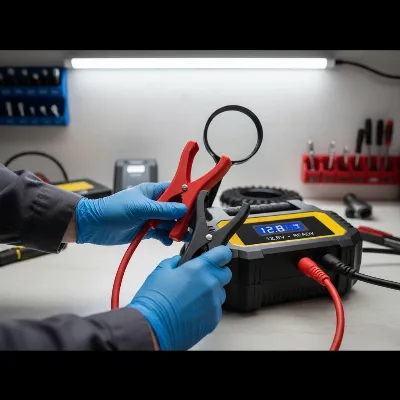 A person inspecting a portable jump starter and its cables, emphasizing proper maintenance and safe handling.
Tips and Tricks for Roadside Emergencies
While a portable jump starter is a lifesaver, being truly prepared for roadside emergencies goes beyond just having the right equipment. A few extra tips and tricks can make a significant difference in stressful situations.
Firstly, always carry a small emergency kit in your vehicle. This kit should include items like a first-aid kit, a basic toolkit, a reflective triangle or flares, a warm blanket, and bottled water. These essentials can be invaluable if you’re stranded for an extended period or in adverse weather conditions. For vehicles with an air compressor jump starter like the Halo Bolt Air, remember that its tire inflation capability is primarily for topping off or temporarily inflating a flat tire to get to a service station, not for sustained heavy-duty use. Knowing its limitations helps manage expectations and prevent further issues.
Furthermore, it’s wise to understand the common reasons for battery drain. Leaving lights on, doors ajar, or frequently making short trips that don’t allow the alternator to fully recharge the battery can all contribute to a dead battery. Regularly checking your car battery’s age and condition, especially before winter, can help prevent unexpected failures. If your vehicle frequently needs a jump start, it might indicate a deeper issue with the battery itself or the charging system, warranting a professional inspection. Always have your phone charged, or use your Halo Bolt’s power bank feature to keep it powered, so you can call for help if necessary.
Halo Bolt Portable Jump Starter – Frequently Asked Questions
What makes the Halo Bolt a good choice for emergency preparedness?
The Halo Bolt is an excellent choice for emergency preparedness due to its multi-functional design, combining a powerful jump starter with a portable power bank, and often an air compressor. This versatility ensures you’re prepared for dead batteries, flat tires, and dead electronic devices, all in one compact unit.
Can the Halo Bolt jump-start any vehicle?
While powerful, the Halo Bolt’s jump-starting capacity varies by model and is generally suitable for most passenger cars, SUVs, motorcycles, boats, and some smaller trucks. For heavy-duty diesel trucks or very large engines, always check the specific peak amp rating of your Halo Bolt model against your vehicle’s requirements.
How long does the Halo Bolt hold a charge?
Halo Bolt jump starters, typically featuring lithium-ion batteries, are designed to hold a charge for several months, often up to a year, when stored properly. However, it’s recommended to periodically check its charge level and top it up every 3-6 months to ensure it’s always ready when you need it most.
Is the Halo Bolt safe to use?
Yes, the Halo Bolt incorporates multiple safety features, including reverse polarity protection, spark-proof technology, and short-circuit protection. These safeguards help prevent damage to both the jump starter and your vehicle if the connections are made incorrectly. Always follow the instructions in the user manual for safe operation.
Can I charge my laptop with the Halo Bolt?
Many Halo Bolt models are equipped with an AC outlet, which allows you to charge laptops and other small electronic appliances that require a standard wall plug. Additionally, its USB ports can charge smartphones, tablets, and other USB-powered devices, making it a highly versatile power source on the go.
What should I do if my Halo Bolt’s air compressor drains the battery quickly?
The air compressor feature, while very useful, does consume a significant amount of battery power. If you find it draining quickly, it’s normal, especially when inflating larger tires from very low pressure. Ensure your Halo Bolt is fully charged before using the compressor, and prioritize its jump-starting function in critical situations.
Conclusion
The Halo Bolt Portable Jump Starter consistently proves itself to be a highly effective and versatile tool for any driver. Through real-world quality tests, it has demonstrated reliable performance in jump-starting a variety of vehicles, from cars and SUVs to boats and RVs. Its integrated features, including USB charging, an LED flashlight, and for many models, an air compressor, transform it from a mere jump starter into an all-in-one emergency powerhouse. The convenience, portability, and robust safety mechanisms of the Halo Bolt offer unparalleled peace of mind on the road. While it’s essential to match the unit’s specifications to your vehicle’s needs and understand its minor limitations, the Halo Bolt represents a smart investment in automotive preparedness. Are you ready to equip your vehicle with a truly dependable roadside companion?