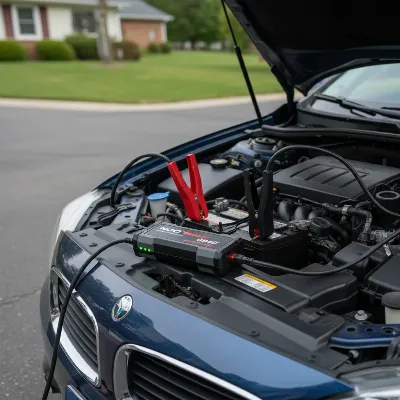
The sudden, insistent beeping of your portable jump starter can be alarming, especially when you’re already facing the frustration of a dead car battery. But don’t panic; these auditory signals are your device’s way of communicating a problem, often a safety precaution or a clear indicator of what needs attention. Understanding these beeps can save you time, prevent potential damage, and quickly get you back on the road. This guide will decode the most common reasons your jump starter might be beeping and provide straightforward solutions to silence the alarm.
Jump Starter: An Essential Tool for Vehicle Emergencies
A jump starter is a portable battery pack designed to provide a quick burst of power to start a vehicle with a dead or weak battery. It’s an indispensable tool for any driver, offering independence from needing another vehicle for a jump start. These devices vary widely in capacity, features, and battery technology, but their core function remains the same: to deliver enough current to crank your engine when your car’s battery cannot.
Portable jump starters typically fall into two main categories based on their internal battery type:
- Lithium-ion Jump Starters: These are generally lighter, more compact, and hold a charge for longer periods. They are very popular due to their portability and efficiency.
- Lead-acid Jump Starters: Often larger and heavier, these older models use a sealed lead-acid battery similar to a car battery. They can deliver significant cranking power but require more frequent recharging.
Regardless of the type, when a jump starter beeps, it’s often a sign that something isn’t quite right with its operation or connection.
Decoding the Beeps: Common Reasons Your Jump Starter Is Warning You
Your jump starter uses different beeping patterns or a steady tone to signal specific issues. Identifying the cause is the first step toward a quick fix.
Reverse Polarity
|
Our Picks for the Best Jump Starter in 2026
As an Amazon Associate I earn from qualifying purchases.
|
||
| Num | Product | Action |
|---|---|---|
| 1 | Tire Inflator Portable Air Compressor with Digitally Display Pressure Gauge 20000mA, Car Air Compressor Pump with Jump Starter 150PSI, 14.8 V Car Battery Jump Starter Portable |

|
| 2 | NOCO Boost X GBX55: 1750A UltraSafe Jump Starter – 12V Lithium Battery Booster Pack, Portable Jump Box, Power Bank & Jumper Cables - for 7.5L Gas and 5.0L Diesel Engines |
|
| 3 | Roar Pedal Super Capacitor Jump Starter, No Need Pre-Charge No Battery 12V Portable Car Jump Starter for All 12V Gas and Diesel Car, Portable Jump Box with Display |
|
| 4 | Tire Inflator Portable Air Compressor & Car Jump Starter, Cordless Air Pump with LED Light & Pressure Gauge for Auto,Motorcycles,Bikes,Balls. |
|
| 5 | Portable Car Jump Starter with Air Compressor for Emergencies,3000A Peak and 150 PSI Max,for 12L Gas & 10L Diesel Engines,LCD Display,LED Light |
|
| 6 | KeenPower 6000A Super Capacitor Battery-Less Jump Starter, Built-in 6 * 3000F Supercapacitor, No Traditional Battery |
|
| 7 | Tire Inflator Portable Air Compressor, 12V Car Jump Starter, 150PSI & 28000mAh Air Pump with Air Blower, Digital Pressure Gauge and LED Light, Electric Air Pump for Car, Motorcycle, Balls, Bike Pump |
|
| 8 | Jump Starter with Air Compressor, 6000A 150PSI Car Battery Jump Starter (10.0 Gas/8.0L Diesel) Battery Jumper Starter Portable 12V Jump Box with Jumper Cables, LED Light, LED Display |
|
| 9 | NOCO Boost X GBX155: 4250A UltraSafe Jump Starter – 12V Lithium Battery Booster Pack, Portable Jump Box, Power Bank & Jumper Cables - for 10.0L Gas and 8.0L Diesel Engines |
|
| 10 | ANCEL BS200 Super Starter - Permanent Connected Starting System with Super Capacitor, Car Battery Jump Booster & Health Monitor via App, -40℉~176℉ in-Cabin Jump Box for 3.0L Vehicles |
|
This is arguably the most common and dangerous reason for your jump starter to beep. Reverse polarity occurs when the positive (red) clamp is connected to the negative battery terminal, and the negative (black) clamp is connected to the positive terminal. Many modern jump starters have built-in safety features that will beep rapidly and prevent power flow in this situation to protect both the jump starter and your vehicle’s electrical system from serious damage.
Quick Fix: Immediately disconnect both clamps from the battery. Reconnect the red clamp to the positive (+) terminal of your car battery and the black clamp to a clean, unpainted metal surface on the engine block or chassis, away from the battery, or directly to the negative (-) terminal if the manufacturer’s instructions allow. Ensure a firm, secure connection.
Low Internal Battery Charge
If your portable jump starter itself doesn’t have enough power, it won’t be able to effectively jump-start your vehicle and will often beep to alert you. A steady beep or an intermittent beep every few seconds might indicate that its internal battery has dropped below a critical charge level (e.g., under 25%).
Quick Fix: Recharge your jump starter immediately. Most manufacturers recommend keeping your jump starter fully charged at all times for optimal performance and longevity. Plug it into a wall outlet and allow it to charge completely, which can take several hours. Do not attempt to jump-start a vehicle with a low-charge jump starter, as this can further damage its internal battery.
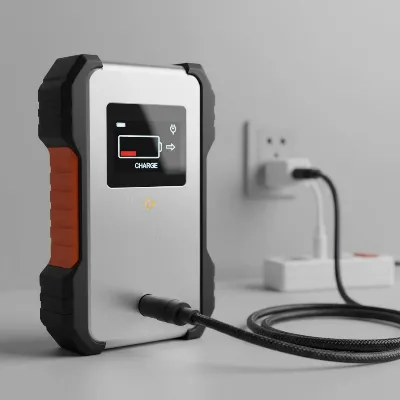 Portable jump starter with a low battery warning icon on its display, plugged into a charger.
Temperature Extremes
Portable jump starters are designed to operate within a specific temperature range. If the unit gets too hot or too cold, its internal sensors may trigger a beeping alarm to protect the battery cells and electronics. Extreme temperatures can severely affect battery performance and safety.
- Too Cold: In freezing conditions (e.g., below -4°F or -20°C), the internal battery capacity and output can significantly decrease.
- Too Hot: High temperatures (e.g., above 140°F or 60°C) can lead to overheating, which is dangerous for lithium-ion batteries.
Quick Fix:
- For Cold Temperatures: Bring the jump starter inside a warm environment, such as your vehicle’s cabin, for 10-15 minutes to allow it to warm up to an optimal operating temperature.
- For Hot Temperatures: Move the jump starter to a shaded, cooler area and allow it to cool down for at least 20 minutes before attempting to use it.
Overload or Short Circuit Protection
Your jump starter might beep if it detects an overload or a short circuit. This can happen if:
- You’re trying to jump-start a vehicle that requires more cranking amps than your jump starter can provide.
- The clamps touch each other after being connected to the battery.
- There’s a short in your vehicle’s electrical system.
- The internal battery of the jump starter is failing and cannot handle the load.
Quick Fix:
- Ensure the vehicle you are trying to jump-start is within the recommended specifications of your jump starter. Check your jump starter’s manual for its peak amperage rating.
- Inspect the clamps for any damage or exposed wires that might cause a short.
- If the issue persists and you suspect a short circuit in your vehicle, it’s best to consult a professional mechanic.
Poor Connection
A weak or intermittent connection between the jump starter clamps and your car battery terminals can cause beeping. This often results from:
- Loose Clamps: Not securely attached to the terminals.
- Corrosion: Rust or buildup on the battery terminals preventing good electrical contact.
- Dirty Terminals: Grime or paint on the connection points.
Quick Fix:
- Ensure the clamps are firmly attached to the battery terminals, making solid metal-to-metal contact. Wiggle them slightly to confirm they are secure.
- If you see corrosion, use a wire brush or a battery terminal cleaner to remove it before reconnecting the clamps.
- Always ensure you are connecting to the appropriate terminals (positive to positive, negative to a ground point or negative terminal).
Vehicle Battery Below Critical Voltage
Some advanced jump starters can detect if your vehicle’s battery voltage is critically low, sometimes below 2 volts or 8 volts, indicating that the battery may be beyond jump-starting and might need replacement. In such cases, the jump starter may beep with a low-pitched tone to signal this condition.
Quick Fix: If your jump starter indicates the vehicle battery is too low, repeated attempts to jump-start it might be futile and could stress your jump starter. Consider having your car battery tested or replaced.
Beeping After Vehicle Starts (Post-Start Beeping)
If your vehicle starts successfully but the jump starter continues to beep, it usually means the clamps have remained connected beyond a safe duration, often a 30-second safety window.
Quick Fix: Disconnect the clamps from your vehicle immediately. Always disconnect the black (negative) clamp first, followed by the red (positive) clamp. If beeping resumes after disconnection, it could indicate an issue with your vehicle’s charging system, such as a faulty alternator, which may require professional diagnosis.
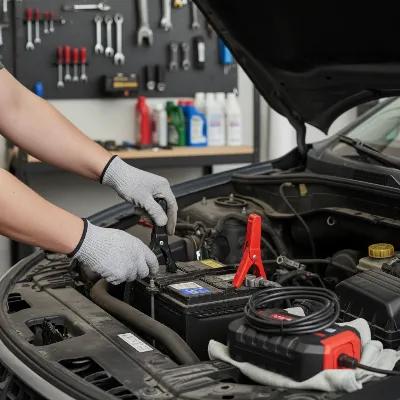 Person safely disconnecting jump starter clamps from a car battery after a successful start.
Quick Fixes and Tips for Beeping Jump Starters
Here’s a summary of immediate actions and best practices to resolve beeping issues and maintain your jump starter:
- Check Connections First: Always ensure your red clamp is on the positive (+) terminal and the black clamp is on the negative (-) terminal or a suitable ground point. Loose or corroded connections are a frequent culprit.
- Charge Your Jump Starter: If the unit beeps with a steady tone or indicates low power, plug it in and allow it to fully charge. A well-maintained jump starter is a reliable one.
- Mind the Temperature: Keep your jump starter stored in a moderate environment. Avoid leaving it in direct sunlight or in extremely cold conditions for prolonged periods.
- Consult the Manual: Your jump starter’s user manual is an invaluable resource. It will have specific beep codes and troubleshooting steps unique to your model.
- Don’t Overload: Ensure your jump starter’s capacity matches the requirements of the vehicle you are trying to start. Trying to jump a large truck with a small starter can trigger overload protection.
- Inspect for Damage: Periodically check the clamps, cables, and casing of your jump starter for any signs of wear, fraying, or physical damage.
> “A portable jump starter is a lifesaver, but understanding its ‘language’ of beeps is crucial for safe and effective use. These warnings are there to protect both you and your vehicle.” – Michael Chen, Automotive Electronics Specialist
Jump Starter – Frequently Asked Questions
Can I leave my jump starter connected to the car battery while the engine is running?
No, you should disconnect your jump starter as soon as the engine starts. Leaving it connected can potentially damage the jump starter or the vehicle’s electrical system, and many units will beep to remind you to disconnect them within a specific timeframe.
Why does my jump starter keep beeping even after I’ve fixed the connection?
If your jump starter continues to beep after correcting the connections, it could indicate that the vehicle battery is too deeply discharged (below the jump starter’s threshold), or there might be an internal fault with the jump starter itself. Some units will also beep if the vehicle’s electrical system has an issue, such as a short.
How often should I charge my portable jump starter if I don’t use it?
It’s generally recommended to charge your portable jump starter every 3-6 months, even if it hasn’t been used. Regular charging helps maintain the battery’s health and ensures the unit is ready when you need it most. Always refer to your specific model’s manual for precise maintenance guidelines.
What should I do if my jump starter beeps and won’t turn on?
If your jump starter beeps and refuses to power on, first ensure it’s fully charged. If charging doesn’t resolve the issue, try a hard reset if your model has one (check the manual). Persistent beeping combined with a failure to power on could indicate a serious internal malfunction or battery failure, often requiring service or replacement.
Is it safe to ignore the beeping sound?
No, it is never safe to ignore the beeping sound from your jump starter. The beeps are critical safety warnings designed to prevent damage to your vehicle, the jump starter, or even injury to yourself. Always address the cause of the beeping immediately.
Conclusion
The beeping of your portable jump starter is not an annoyance but a vital safety and diagnostic signal. By understanding what these various beeps signify – from reverse polarity and low battery charge to temperature warnings or connection issues – you can quickly and confidently troubleshoot the problem. Always prioritize safety, follow your jump starter’s manual, and maintain your device with regular charging. Addressing these warnings promptly ensures your jump starter remains a reliable ally against unexpected battery troubles, keeping you prepared for anything the road throws your way. Do you know what your jump starter is trying to tell you?