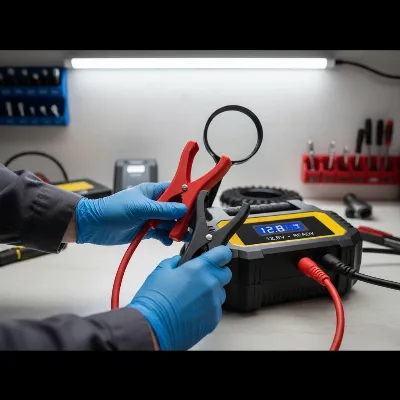
Imagine the frustration of a dead car battery, leaving you stranded and late. This common scenario is precisely why a jump starter is an invaluable tool in any vehicle owner’s arsenal. A portable jump starter offers the peace of mind that comes with knowing you can quickly revive your car without relying on another vehicle or roadside assistance. However, simply owning one isn’t enough; proper maintenance is the true key to ensuring your jump starter is always ready when you need it most, guaranteeing its optimal performance and extending its lifespan for years to come.
Jump Starter: An Essential Companion for Vehicle Reliability
A jump starter is a portable power pack designed to deliver a quick burst of electricity to a flat car battery, allowing you to start your vehicle. These devices typically consist of an internal battery, heavy-duty cables with alligator clamps, and often come with additional features like USB charging ports, LED flashlights, and even air compressors. Their convenience makes them a crucial emergency tool for anyone on the road, offering independence and saving you from inconvenient delays. While various types exist, including traditional lead-acid and modern lithium-ion models, the principles of care remain universally critical to their function.
Essential Practices for Prolonging Your Jump Starter’s Lifespan
Maintaining your jump starter doesn’t require extensive technical knowledge, but rather consistent adherence to a few fundamental practices. By incorporating these habits into your routine, you can significantly enhance your device’s reliability and extend its useful life, ensuring it’s always prepared for an unexpected battery failure.
Optimal Charging Habits
|
Our Picks for the Best Jump Starter in 2026
As an Amazon Associate I earn from qualifying purchases.
|
||
| Num | Product | Action |
|---|---|---|
| 1 | KeenPower 6000A Super Capacitor Battery-Less Jump Starter, Built-in 6 * 3000F Supercapacitor, No Traditional Battery |

|
| 2 | Tire Inflator Portable Air Compressor & Car Jump Starter, Cordless Air Pump with LED Light & Pressure Gauge for Auto,Motorcycles,Bikes,Balls. |
|
| 3 | ANCEL BS200 Super Starter - Permanent Connected Starting System with Super Capacitor, Car Battery Jump Booster & Health Monitor via App, -40℉~176℉ in-Cabin Jump Box for 3.0L Vehicles |
|
| 4 | NOCO Boost X GBX155: 4250A UltraSafe Jump Starter – 12V Lithium Battery Booster Pack, Portable Jump Box, Power Bank & Jumper Cables - for 10.0L Gas and 8.0L Diesel Engines |
|
| 5 | Portable Car Jump Starter with Air Compressor for Emergencies,3000A Peak and 150 PSI Max,for 12L Gas & 10L Diesel Engines,LCD Display,LED Light |
|
| 6 | Tire Inflator Portable Air Compressor, 12V Car Jump Starter, 150PSI & 28000mAh Air Pump with Air Blower, Digital Pressure Gauge and LED Light, Electric Air Pump for Car, Motorcycle, Balls, Bike Pump |
|
| 7 | Jump Starter with Air Compressor, 6000A 150PSI Car Battery Jump Starter (10.0 Gas/8.0L Diesel) Battery Jumper Starter Portable 12V Jump Box with Jumper Cables, LED Light, LED Display |
|
| 8 | Tire Inflator Portable Air Compressor with Digitally Display Pressure Gauge 20000mA, Car Air Compressor Pump with Jump Starter 150PSI, 14.8 V Car Battery Jump Starter Portable |
|
| 9 | NOCO Boost X GBX55: 1750A UltraSafe Jump Starter – 12V Lithium Battery Booster Pack, Portable Jump Box, Power Bank & Jumper Cables - for 7.5L Gas and 5.0L Diesel Engines |
|
| 10 | Roar Pedal Super Capacitor Jump Starter, No Need Pre-Charge No Battery 12V Portable Car Jump Starter for All 12V Gas and Diesel Car, Portable Jump Box with Display |
|
Regular charging is the single most critical aspect of jump starter maintenance. Even when not in use, a jump starter’s internal battery slowly discharges over time. Keeping the unit adequately charged prevents deep discharge, which can permanently damage the battery and reduce its overall capacity.
Most manufacturers recommend recharging your jump starter at least every three months, or more frequently if used often. A good practice is to charge it after every use, regardless of how much power was drawn. Modern lithium-ion jump starters typically do not suffer from memory effect, meaning frequent top-ups will not harm their battery health. While many units have built-in overcharge protection, it’s generally advised to avoid leaving them plugged in for excessive periods, such as more than 24 hours, to promote longevity. Aim to keep the charge level above 70-80% to ensure readiness and battery health.
Ideal Storage Conditions
The environment in which you store your jump starter plays a significant role in its long-term health. Extreme temperatures, both hot and cold, can severely impact battery performance and lifespan. Batteries, especially lithium-ion ones, are sensitive to temperature fluctuations, which can lead to capacity loss and degradation.
Always store your jump starter in a cool, dry place, ideally within a moderate temperature range of 50-80°F (10-20°C). Storing it in direct sunlight, a freezing garage, or a car exposed to extreme heat can accelerate battery degradation and reduce its effectiveness when needed. A unit stored at optimal temperatures will not only last longer but also deliver more power when called upon.
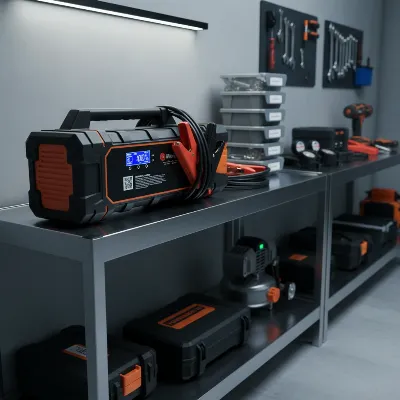 A jump starter stored safely in a cool, dry garage, away from direct sunlight and extreme temperatures, emphasizing proper maintenance.
Regular Inspection and Cleaning
Periodic inspection and cleaning are crucial for identifying potential issues before they become serious problems. This includes checking the device’s physical condition, especially the cables and clamps. Damaged components can compromise safety and prevent the jump starter from working effectively.
Regularly inspect the cables for any signs of cracks, fraying, or exposed wiring. Ensure the alligator clamps are free from corrosion and are clean, as corrosion can hinder a reliable connection to the car battery terminals. Wipe down the exterior of the jump starter periodically to remove dust, dirt, and debris, paying close attention to connectors and charging ports. Also, visually check the unit itself for any signs of physical damage, such as swelling of the casing or leaks, which could indicate internal battery issues. If any such damage is observed, discontinue use immediately and contact the manufacturer for guidance.
Understanding and Respecting the Duty Cycle
Every jump starter has a specified “duty cycle,” which refers to the duration it can be operated continuously before needing a rest period. Ignoring this can lead to excessive heat buildup, which is detrimental to the internal components and the battery itself, significantly shortening the device’s life.
For many automotive jump starters, a common duty cycle recommendation is to crank the vehicle for no more than six seconds, followed by at least a three-minute rest period. Always refer to your jump starter’s operator’s manual for its specific duty cycle guidelines. Adhering to these instructions prevents overheating, which can damage the battery’s internal construction and reduce its ability to hold a charge effectively.
> “Consistent attention to your jump starter’s charging, storage, and duty cycle isn’t just about convenience; it’s about investing in the longevity of a critical safety device.” – Sarah Chen, Automotive Electronics Specialist
Maximizing Performance: Advanced Tips and Troubleshooting
Beyond the core maintenance practices, understanding how to use your jump starter efficiently and knowing basic troubleshooting steps can further enhance its performance and ensure it’s always ready for action. These practices contribute directly to the device’s overall health and reliability.
While the primary focus is maintenance, safe and effective usage is inherently tied to preventing wear and tear. Always connect the red clamp to the positive (+) terminal of the dead battery first, then the black clamp to a clean, unpainted metal surface on the engine block (ground) or the negative (-) terminal of the battery if explicitly allowed by your device’s manual. Once the vehicle starts, disconnect the black clamp first, then the red. This sequence minimizes the risk of sparks and electrical shorts. Regularly using your jump starter, even just for testing, if it sits unused for extended periods, can help keep the internal battery active and healthy. If your jump starter is rarely used, testing it on a completely dead car battery (if available) every few months can help cycle the battery and prevent degradation.
If your jump starter fails to operate as expected, begin by ensuring it is fully charged. Often, a lack of charge is the simplest explanation for a malfunction. Next, perform a thorough visual inspection of the cables and clamps for any damage or corrosion that might impede a proper connection. If the issue persists, attempting to test it on a different vehicle or checking the indicator lights for error codes can help diagnose the problem. Always consult your user manual for specific troubleshooting steps provided by the manufacturer.
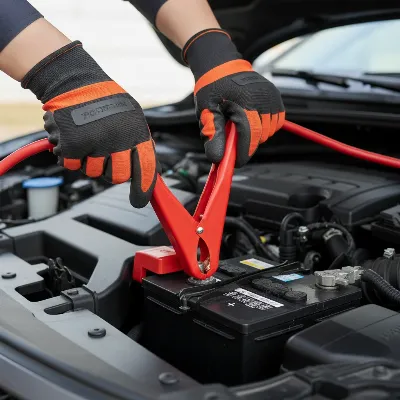 A person safely and correctly connecting a jump starter to a car battery, illustrating proper usage and safety precautions for vehicle starting.
Frequently Asked Questions About Jump Starter Maintenance
Even with diligent care, some common questions often arise regarding jump starter maintenance. Addressing these can further clarify best practices and ensure users are fully confident in their device’s readiness.
How often should I recharge my jump starter?
Most experts recommend recharging your jump starter every three months, even if it hasn’t been used. This practice ensures the internal battery remains healthy and prevents it from falling into a deep discharge state, which can shorten its lifespan. After each use, a full recharge is also advisable to prepare it for the next emergency.
Can I keep my jump starter in my car?
While convenient, keeping your jump starter in your car is only recommended if the vehicle is stored in a climate-controlled environment. Jump starters perform best and last longest when stored at moderate room temperatures, typically between 50-80°F (10-20°C). Extreme heat or cold inside a vehicle can significantly degrade the battery over time. If you must keep it in your car, ensure it’s in a shaded area and regularly check its charge.
What should I do if my jump starter doesn’t work?
If your jump starter fails, first ensure it is fully charged. Then, inspect the cables and clamps for any signs of damage or corrosion that could impede a proper connection. Make sure the clamps are securely attached to the battery terminals. If these steps don’t resolve the issue, consult your user manual for specific troubleshooting advice or consider contacting the manufacturer for support.
Is it okay to overcharge a jump starter?
Modern jump starters, especially lithium-ion models, often include advanced safety features to prevent overcharging. However, to maximize battery longevity, it’s generally best to avoid leaving the unit plugged in for extended periods beyond a full charge, such as more than 24 hours. Regular, short top-up charges are preferable to constant, prolonged charging.
Conclusion
A well-maintained jump starter is an indispensable tool that offers unparalleled security and convenience on the road. By consistently adhering to essential practices such as regular charging, storing the unit in optimal conditions, conducting routine inspections of cables and clamps, and respecting its duty cycle, you can significantly extend the life and reliability of your device. These simple yet crucial steps ensure your jump starter is always ready to deliver power precisely when you need it most. Don’t wait for a dead battery to remind you; take a moment to check your jump starter’s charge and condition today. How often do you currently check your jump starter’s readiness, and what’s one new maintenance tip you’ll implement?
Frequently Asked Questions
What is the typical lifespan of a well-maintained jump starter?
With proper maintenance, including regular charging, ideal storage, and careful use, a high-quality jump starter can last anywhere from 3 to 7 years, or even longer. Factors like battery chemistry (lithium-ion generally outlasts lead-acid if properly cared for) and frequency of use also play a significant role in its overall lifespan.
How does extreme cold affect a jump starter’s performance?
Extreme cold can significantly reduce a jump starter’s immediate power output and its overall battery capacity. Batteries operate less efficiently in cold temperatures, meaning a jump starter stored in freezing conditions will deliver less cranking power and may drain faster than one stored at moderate temperatures. It is always best to keep it indoors during harsh winter months.