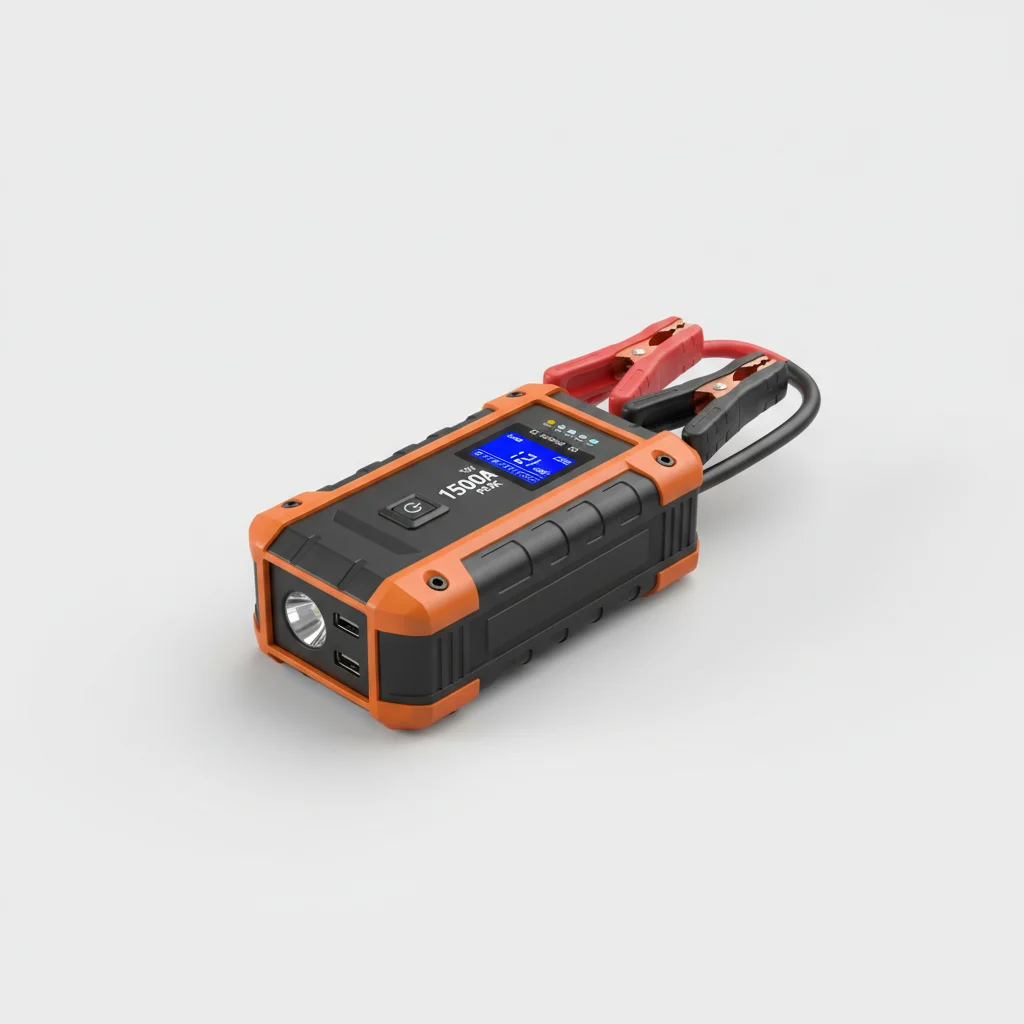
When selecting a jump starter for your motorcycle, you typically need a device that delivers between 200 and 400 peak amps. This range is sufficient for most motorcycle batteries, which are smaller and have lower cold cranking amp (CCA) requirements compared to car batteries. While some larger touring motorcycles or those with higher compression engines might benefit from a unit closer to 500 peak amps, exceeding this is generally unnecessary and can be overkill, adding to the cost and size without significant benefit.
Understanding Motorcycle Battery Requirements
Motorcycle batteries, whether lead-acid or lithium-ion, are designed to provide a burst of power for starting. Their CCA ratings are considerably lower than automotive batteries, often ranging from 80 CCA to 250 CCA. A jump starter’s peak amp rating indicates the maximum current it can deliver for a very short period, which is crucial for overcoming the initial resistance of a dead battery and turning over the engine. Matching the jump starter’s output to your motorcycle’s specific needs prevents overspending on an unnecessarily powerful unit and ensures safe operation. For more automotive emergency guides on this site.
Factors Influencing Amp Needs
Several factors can influence the ideal amperage for your motorcycle jump starter. The engine size is paramount; a small 250cc cruiser will require less power than a 1800cc touring bike. The type of engine also plays a role; higher compression engines demand more starting power. Additionally, cold weather significantly increases the resistance of a battery, meaning a slightly higher amperage might be beneficial if you frequently ride in colder climates. Always consult your motorcycle’s owner’s manual for specific battery specifications and recommended starting procedures.
Choosing the Right Jump Starter Size
|
Our Picks for the Best Jump Starter in 2026
As an Amazon Associate I earn from qualifying purchases.
|
||
| Num | Product | Action |
|---|---|---|
| 1 | Jump Starter with Air Compressor, 6000A 150PSI Car Battery Jump Starter (10.0 Gas/8.0L Diesel) Battery Jumper Starter Portable 12V Jump Box with Jumper Cables, LED Light, LED Display |

|
| 2 | Tire Inflator Portable Air Compressor with Digitally Display Pressure Gauge 20000mA, Car Air Compressor Pump with Jump Starter 150PSI, 14.8 V Car Battery Jump Starter Portable |
|
| 3 | NOCO Boost X GBX55: 1750A UltraSafe Jump Starter – 12V Lithium Battery Booster Pack, Portable Jump Box, Power Bank & Jumper Cables - for 7.5L Gas and 5.0L Diesel Engines |
|
| 4 | KeenPower 6000A Super Capacitor Battery-Less Jump Starter, Built-in 6 * 3000F Supercapacitor, No Traditional Battery |
|
| 5 | Tire Inflator Portable Air Compressor, 12V Car Jump Starter, 150PSI & 28000mAh Air Pump with Air Blower, Digital Pressure Gauge and LED Light, Electric Air Pump for Car, Motorcycle, Balls, Bike Pump |
|
| 6 | Tire Inflator Portable Air Compressor & Car Jump Starter, Cordless Air Pump with LED Light & Pressure Gauge for Auto,Motorcycles,Bikes,Balls. |
|
| 7 | ANCEL BS200 Super Starter - Permanent Connected Starting System with Super Capacitor, Car Battery Jump Booster & Health Monitor via App, -40℉~176℉ in-Cabin Jump Box for 3.0L Vehicles |
|
| 8 | Portable Car Jump Starter with Air Compressor for Emergencies,3000A Peak and 150 PSI Max,for 12L Gas & 10L Diesel Engines,LCD Display,LED Light |
|
| 9 | Roar Pedal Super Capacitor Jump Starter, No Need Pre-Charge No Battery 12V Portable Car Jump Starter for All 12V Gas and Diesel Car, Portable Jump Box with Display |
|
| 10 | NOCO Boost X GBX155: 4250A UltraSafe Jump Starter – 12V Lithium Battery Booster Pack, Portable Jump Box, Power Bank & Jumper Cables - for 10.0L Gas and 8.0L Diesel Engines |
|
Selecting the correct jump starter involves more than just peak amps. Consider the unit’s overall size and weight, especially if you plan to carry it on your motorcycle. Many compact lithium-ion jump starters are perfectly suited for motorcycles, offering high power in a small package. Look for features like reverse polarity protection, spark-proof technology, and a durable casing. A built-in flashlight and USB charging ports can also be valuable additions for roadside emergencies.
- Check your motorcycle’s owner’s manual for battery CCA.
- Consider a jump starter with 200-400 peak amps for most bikes.
- Opt for 500 peak amps if you have a large touring or high-compression engine.
- Prioritize safety features like reverse polarity protection.
- Evaluate portability and additional features like USB charging.
Safety Precautions and Best Practices
Even with a low-amperage jump starter, safety is paramount. Always read the jump starter’s instructions carefully before use. Ensure both the motorcycle and the jump starter are on a stable, level surface. Connect the positive (+) clamp to the positive terminal of the motorcycle battery first, then the negative (-) clamp to a good ground point on the motorcycle frame, away from the battery and fuel lines. Never connect the negative clamp directly to the negative battery terminal unless specifically instructed by the jump starter’s manual. Once the motorcycle starts, disconnect the clamps in reverse order: negative first, then positive.
Maintaining Your Motorcycle Jump Starter
To ensure your motorcycle jump starter is ready when you need it, proper maintenance is essential. Regularly check the charge level of the jump starter, especially if it’s stored for extended periods. Most lithium-ion jump starters should be recharged every 3-6 months, even if not used, to prevent deep discharge and prolong battery life. Store the unit in a cool, dry place, away from direct sunlight and extreme temperatures. Inspect the clamps and cables for any signs of wear or damage before each use. A well-maintained jump starter is a reliable emergency tool.

I picked up one of the 300-amp jump starters mentioned for my Harley, and it’s been a lifesaver. Had a dead battery after leaving my lights on, and it fired right up without any fuss. Super compact too, fits easily under the seat. Definitely recommend having one of these on hand for peace of mind.
This is a solid little device. I got a 400-peak amp unit for my touring bike, and it’s worked great the couple of times I’ve needed it. My only minor complaint is that the clamps feel a little flimsy, but they do the job. For the price, it’s hard to beat the convenience.
Finally got tired of asking for a jump from other riders. This portable jump starter is fantastic. I went with a unit that was around the 400-amp mark, and it’s perfect for my Yamaha. It’s small enough to carry in my tank bag and holds a charge for ages. Every motorcycle owner should have one of these.
I was hoping a 250 CCA rated jump starter would be enough for my older sportbike, but it struggled a bit on a really cold morning. It eventually got it going, but it wasn’t as quick as I expected. Maybe I should have gone for something closer to 500 peak amps like it suggested for higher compression engines. It’s still useful, just not a miracle worker.