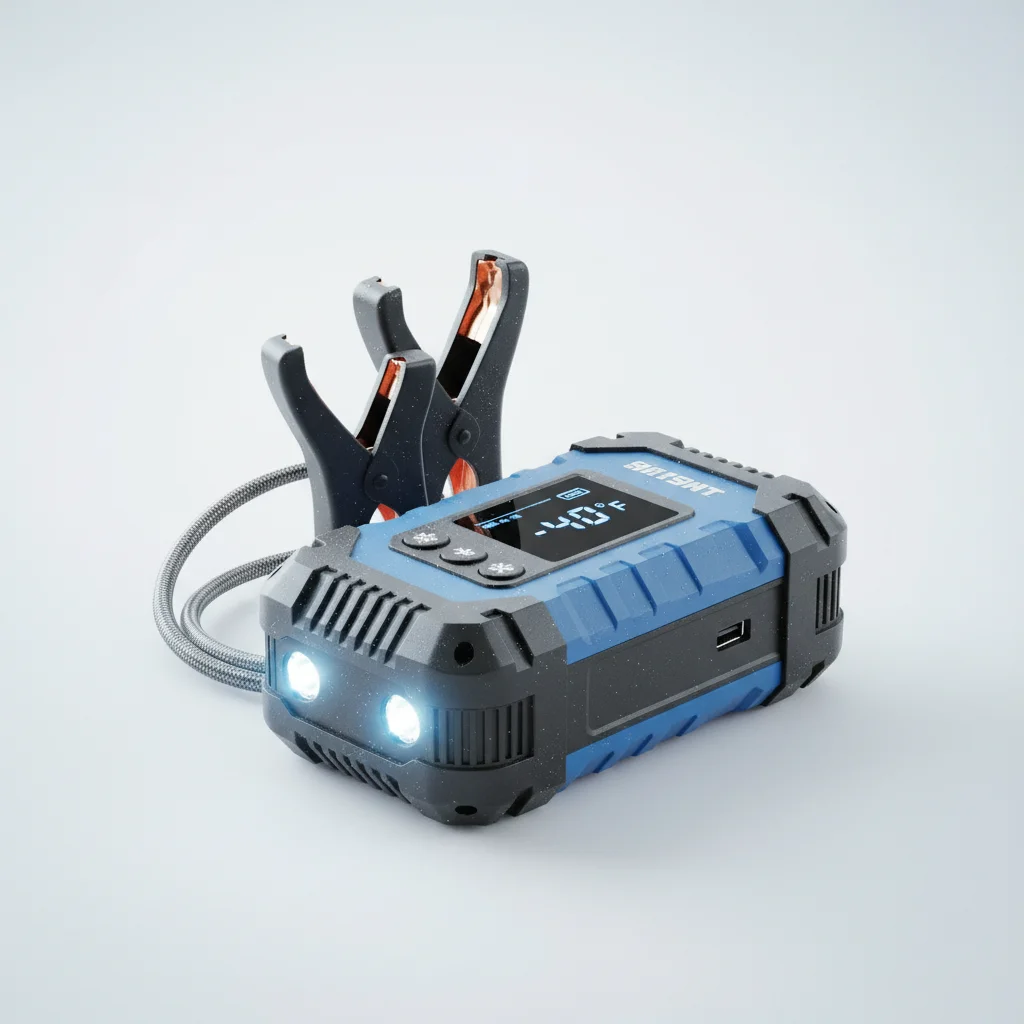
When considering a jump starter for cold weather, most reliable units are designed to operate effectively down to -4°F (-20°C). However, some advanced models can perform in even more extreme conditions, reaching as low as -22°F (-30°C). The key factor is the battery chemistry and the internal thermal management system of the jump starter itself. Lithium-ion jump starters, while generally more compact, can be more susceptible to performance degradation in severe cold compared to older lead-acid units, though modern lithium designs have significantly improved.
Understanding Cold Weather Impact on Jump Starters
Cold temperatures significantly affect battery performance, both in your vehicle and in your portable jump starter. Chemical reactions within batteries slow down in the cold, reducing their ability to deliver current. For a jump starter, this means its peak amperage output can be diminished, making it harder to crank a stubborn engine. Manufacturers often specify an operating temperature range, and exceeding the lower limit can lead to inefficient performance or even damage to the unit’s internal battery.
It’s crucial to store your jump starter properly, especially in regions with harsh winters. Keeping it in a climate-controlled environment, like inside your home or a heated garage, rather than in a freezing car trunk, will ensure it’s ready when you need it most. Regular charging also helps maintain its readiness, as a fully charged battery is more resilient to cold than a partially discharged one.
Key Features for Cold Weather Performance
When selecting a jump starter for cold climates, look for specific features that enhance its reliability. High peak amperage is essential, as cold engines require more power to turn over. A unit with a higher cold-cranking amp (CCA) rating, even if it’s a jump starter, indicates better performance in low temperatures. Additionally, some jump starters incorporate pre-heating functions or robust insulation to protect their internal batteries.
Consider the build quality and casing materials. Units designed for extreme conditions often have more durable, impact-resistant housings that can withstand the rigors of winter use. The quality of the cables and clamps also matters; thicker gauge cables (lower AWG number) and robust, all-metal clamps will ensure maximum power transfer without excessive voltage drop in the cold.
- High Peak Amperage (1500A or more for standard vehicles)
- Wide Operating Temperature Range (down to -20°F or lower)
- Robust, Insulated Casing
- Thick Gauge Cables and Heavy-Duty Clamps
- Reliable Internal Battery Chemistry (e.g., LiFePO4 for some models)
Maintaining Your Jump Starter in Winter
|
Our Picks for the Best Jump Starter in 2026
As an Amazon Associate I earn from qualifying purchases.
|
||
| Num | Product | Action |
|---|---|---|
| 1 | Roar Pedal Super Capacitor Jump Starter, No Need Pre-Charge No Battery 12V Portable Car Jump Starter for All 12V Gas and Diesel Car, Portable Jump Box with Display |

|
| 2 | Tire Inflator Portable Air Compressor, 12V Car Jump Starter, 150PSI & 28000mAh Air Pump with Air Blower, Digital Pressure Gauge and LED Light, Electric Air Pump for Car, Motorcycle, Balls, Bike Pump |
|
| 3 | NOCO Boost X GBX55: 1750A UltraSafe Jump Starter – 12V Lithium Battery Booster Pack, Portable Jump Box, Power Bank & Jumper Cables - for 7.5L Gas and 5.0L Diesel Engines |
|
| 4 | Tire Inflator Portable Air Compressor & Car Jump Starter, Cordless Air Pump with LED Light & Pressure Gauge for Auto,Motorcycles,Bikes,Balls. |
|
| 5 | Jump Starter with Air Compressor, 6000A 150PSI Car Battery Jump Starter (10.0 Gas/8.0L Diesel) Battery Jumper Starter Portable 12V Jump Box with Jumper Cables, LED Light, LED Display |
|
| 6 | KeenPower 6000A Super Capacitor Battery-Less Jump Starter, Built-in 6 * 3000F Supercapacitor, No Traditional Battery |
|
| 7 | NOCO Boost X GBX155: 4250A UltraSafe Jump Starter – 12V Lithium Battery Booster Pack, Portable Jump Box, Power Bank & Jumper Cables - for 10.0L Gas and 8.0L Diesel Engines |
|
| 8 | Portable Car Jump Starter with Air Compressor for Emergencies,3000A Peak and 150 PSI Max,for 12L Gas & 10L Diesel Engines,LCD Display,LED Light |
|
| 9 | ANCEL BS200 Super Starter - Permanent Connected Starting System with Super Capacitor, Car Battery Jump Booster & Health Monitor via App, -40℉~176℉ in-Cabin Jump Box for 3.0L Vehicles |
|
| 10 | Tire Inflator Portable Air Compressor with Digitally Display Pressure Gauge 20000mA, Car Air Compressor Pump with Jump Starter 150PSI, 14.8 V Car Battery Jump Starter Portable |
|
Proper maintenance is vital for ensuring your jump starter performs optimally when temperatures drop. Always keep the unit fully charged. A jump starter that is only partially charged will lose its capacity much faster in the cold and may not have enough power to start your vehicle. Check the charge level regularly, especially if it’s stored in a vehicle that experiences temperature fluctuations.
Inspect the cables and clamps for any signs of wear, corrosion, or damage. Cold weather can make plastic and rubber components brittle, so ensure the insulation on the cables is intact and the clamps make a solid connection. Clean any dirt or debris from the clamps to ensure good conductivity. Storing the unit in a protective case can also help shield it from moisture and extreme cold.
Recommended Models for Extreme Cold
For those living in areas with consistently freezing temperatures, investing in a jump starter specifically engineered for cold weather is a wise decision. Models like theare known for their robust performance in sub-zero conditions, often featuring advanced battery management systems that mitigate the effects of cold. Another excellent option is the, which boasts a wide operating temperature range and high peak current delivery, making it suitable for even the most challenging winter mornings.
Always refer to the manufacturer’s specifications for the exact operating temperature range of any jump starter you consider. Prioritizing units with a proven track record in cold environments will provide peace of mind and reliable starting power when you need it most.

This is exactly what I needed to read before buying. I was confused about why some jump starters cost so much more. Understanding that battery chemistry and thermal management are key for cold weather performance really helped me make an informed decision. I ended up getting a highly-rated lithium-ion model and it’s been fantastic, even on those frosty mornings.
I live in Minnesota and my old car really struggles in the winter. I picked up one of the advanced lithium-ion jump starters mentioned that can handle down to -22°F. It’s been a lifesaver! Started my car right up last week when it was -15°F, no problem at all. So much better than waiting for roadside assistance.
I’ve been using a portable jump starter for a few years now, and it’s generally great. The only thing is, my older lead-acid unit is pretty bulky. I’m thinking about upgrading to a more compact lithium-ion one, but I’m a little worried about the performance degradation in severe cold that was mentioned. For now, this one gets the job done, but it takes up a lot of trunk space.
I bought a cheaper jump starter last year, thinking it would be fine for our mild winters. Turns out, it only works down to about -4°F. We had a cold snap where it dropped to -10°F, and it just wouldn’t kick on. I guess I should have invested in one with better internal thermal management. It’s okay for less extreme cold, but definitely not for the really deep freezes.