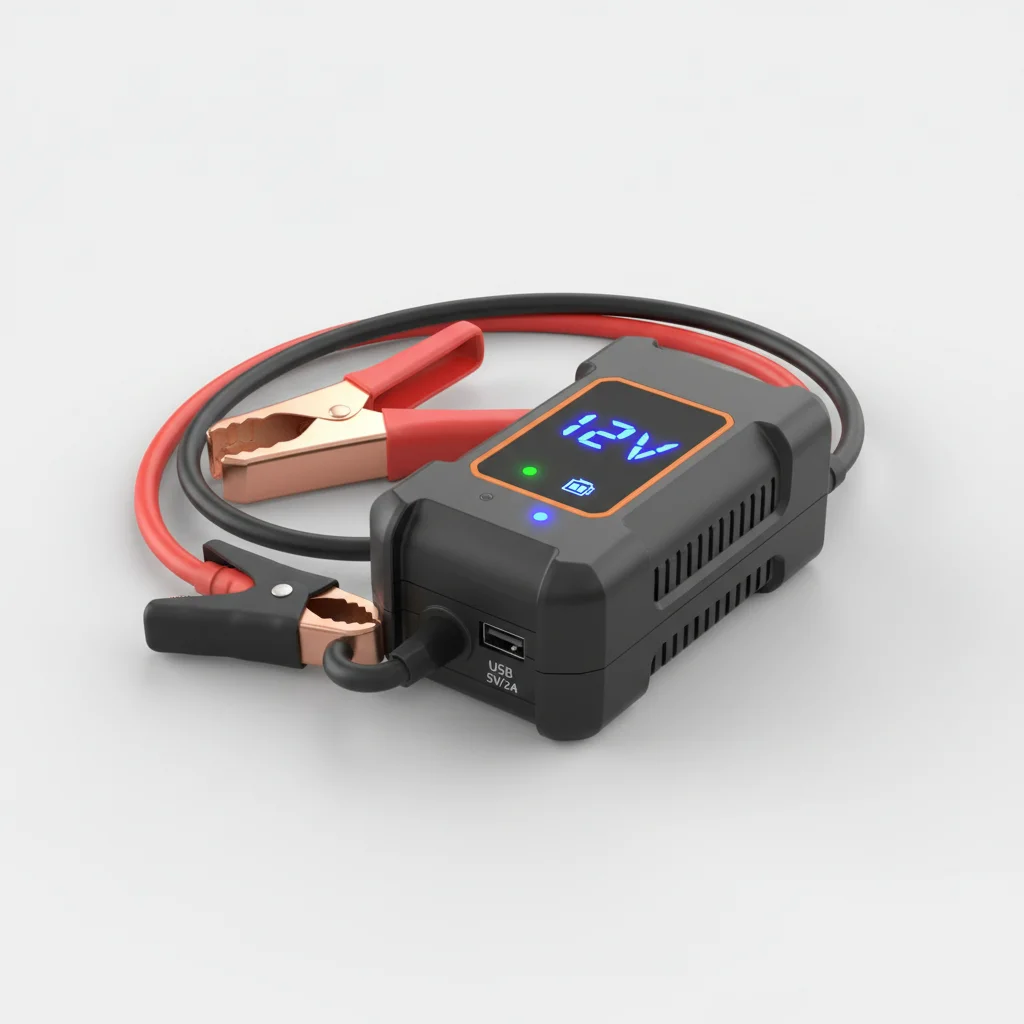
When selecting a jump starter for your car, the voltage you need is almost universally 12 volts. The vast majority of passenger cars, light trucks, and SUVs operate on a 12-volt electrical system, making a 12V jump starter the standard and correct choice for these vehicles. While some heavy-duty commercial vehicles might use 24-volt systems, these are rare for personal use and require specialized equipment.
Understanding Car Battery Voltage
Car batteries are designed to provide a specific voltage to power the vehicle’s electrical components and start the engine. For most modern vehicles, this is a 12-volt lead-acid battery. When a battery dies, its voltage drops below the necessary threshold to crank the engine. A jump starter’s role is to temporarily supply the required 12 volts (and sufficient amperage) to overcome this deficit and get the engine running again.
It’s crucial to match the jump starter’s voltage output to your vehicle’s system. Using a 24-volt jump starter on a 12-volt car could cause severe damage to the vehicle’s electrical system, including the alternator, starter, and sensitive electronics. Always verify your vehicle’s battery voltage, though for most cars, 12V is the safe assumption.
Amperage vs. Voltage: Why Both Matter
While voltage is about the electrical potential, amperage (specifically peak amps and cranking amps) is about the sheer power delivered. A jump starter needs to provide enough voltage to match your car’s system, but it also needs sufficient amperage to turn over the engine. A small 12V jump starter might be fine for a compact sedan, but a larger SUV or truck will require a 12V jump starter with higher peak and cranking amp ratings.
Think of voltage as the ‘pressure’ and amperage as the ‘volume’ of electricity. You need the right pressure (12V) and enough volume (amps) to get the job done. Always check your vehicle’s owner’s manual or the battery itself for recommended cold cranking amps (CCA) to help guide your jump starter amperage selection.
When a 24-Volt Jump Starter is Necessary
|
Our Picks for the Best Jump Starter in 2026
As an Amazon Associate I earn from qualifying purchases.
|
||
| Num | Product | Action |
|---|---|---|
| 1 | NOCO Boost X GBX55: 1750A UltraSafe Jump Starter – 12V Lithium Battery Booster Pack, Portable Jump Box, Power Bank & Jumper Cables - for 7.5L Gas and 5.0L Diesel Engines |

|
| 2 | Tire Inflator Portable Air Compressor with Digitally Display Pressure Gauge 20000mA, Car Air Compressor Pump with Jump Starter 150PSI, 14.8 V Car Battery Jump Starter Portable |
|
| 3 | Portable Car Jump Starter with Air Compressor for Emergencies,3000A Peak and 150 PSI Max,for 12L Gas & 10L Diesel Engines,LCD Display,LED Light |
|
| 4 | Tire Inflator Portable Air Compressor, 12V Car Jump Starter, 150PSI & 28000mAh Air Pump with Air Blower, Digital Pressure Gauge and LED Light, Electric Air Pump for Car, Motorcycle, Balls, Bike Pump |
|
| 5 | Roar Pedal Super Capacitor Jump Starter, No Need Pre-Charge No Battery 12V Portable Car Jump Starter for All 12V Gas and Diesel Car, Portable Jump Box with Display |
|
| 6 | NOCO Boost X GBX155: 4250A UltraSafe Jump Starter – 12V Lithium Battery Booster Pack, Portable Jump Box, Power Bank & Jumper Cables - for 10.0L Gas and 8.0L Diesel Engines |
|
| 7 | ANCEL BS200 Super Starter - Permanent Connected Starting System with Super Capacitor, Car Battery Jump Booster & Health Monitor via App, -40℉~176℉ in-Cabin Jump Box for 3.0L Vehicles |
|
| 8 | KeenPower 6000A Super Capacitor Battery-Less Jump Starter, Built-in 6 * 3000F Supercapacitor, No Traditional Battery |
|
| 9 | Tire Inflator Portable Air Compressor & Car Jump Starter, Cordless Air Pump with LED Light & Pressure Gauge for Auto,Motorcycles,Bikes,Balls. |
|
| 10 | Jump Starter with Air Compressor, 6000A 150PSI Car Battery Jump Starter (10.0 Gas/8.0L Diesel) Battery Jumper Starter Portable 12V Jump Box with Jumper Cables, LED Light, LED Display |
|
As mentioned, 24-volt jump starters are specifically designed for vehicles with 24-volt electrical systems. These typically include large commercial trucks, buses, heavy construction equipment, and some military vehicles. If you own such a vehicle, you will need a dedicated 24V jump starter or a dual-voltage unit that can switch between 12V and 24V. Never attempt to jump start a 24V vehicle with a 12V jump starter, as it will be insufficient and potentially damaging to the jump starter itself.
- Commercial semi-trucks and tractor-trailers
- Large buses and coaches
- Heavy-duty construction machinery (e.g., excavators, bulldozers)
- Certain agricultural equipment
- Some specialized military vehicles
For the average car owner, a 24-volt jump starter is unnecessary and could be dangerous if misused on a standard 12-volt vehicle.
Choosing the Right 12V Jump Starter for Your Car
Once you’ve confirmed your car needs a 12V jump starter, the next step is to consider the amperage. The size of your engine is the primary factor. Smaller 4-cylinder engines require less power than larger V6 or V8 engines. Look for jump starters that specify their peak and cranking amps. A good rule of thumb is to aim for at least 400-500 peak amps for 4-cylinder cars, 600-800 peak amps for V6 engines, and 1000+ peak amps for V8 engines and larger.
Consider additional features like built-in air compressors, USB charging ports, and safety features such as spark-proof technology and reverse polarity protection. These can add significant value and convenience, making your jump starter a more versatile emergency tool. Always read reviews and choose a reputable brand to ensure reliability and safety.
Safety Precautions for Jump Starting
Regardless of the voltage, safety is paramount when jump starting. Always wear appropriate personal protective equipment, such as safety glasses and gloves. Ensure your jump starter is fully charged before use. Connect the clamps correctly: positive to positive, negative to a ground point on the engine block (not directly to the negative battery terminal, especially with modern cars). Refer to your vehicle’s owner’s manual for specific jump starting procedures and safety warnings. Incorrect connections can lead to sparks, battery damage, or even explosions.

I always thought I needed some super high-tech jump starter, but it turns out the 12-volt standard is all my SUV needs. This really clarified things for me. I picked up a compact 12V unit after reading this and it’s already saved me once when my battery died in a parking lot. Super easy to use and totally reliable.
I’ve been using a portable jump starter for a while now, and it’s a lifesaver. The info about how a dead battery drops below the necessary threshold really hit home. My only minor complaint is that the charging cable for my unit is a little short, but that’s more about the product than the advice here. Still, it’s great to understand the ‘why’ behind the 12-volt recommendation.
Good overview of jump starters and the 12-volt system. I was hoping for a bit more detail on specific amperage recommendations for different engine sizes, beyond just the voltage. It’s helpful to know that 24-volt systems are mostly for commercial vehicles, so I don’t have to worry about that for my sedan. Just wish there was a bit more on picking the right power for smaller cars.
This was exactly what I needed to understand car battery voltage. I used to just grab whatever jump starter was on sale, but now I get why matching the 12 volts is so important. It’s reassuring to know that most passenger cars are covered by the standard 12V. Definitely feel more confident about my next purchase.