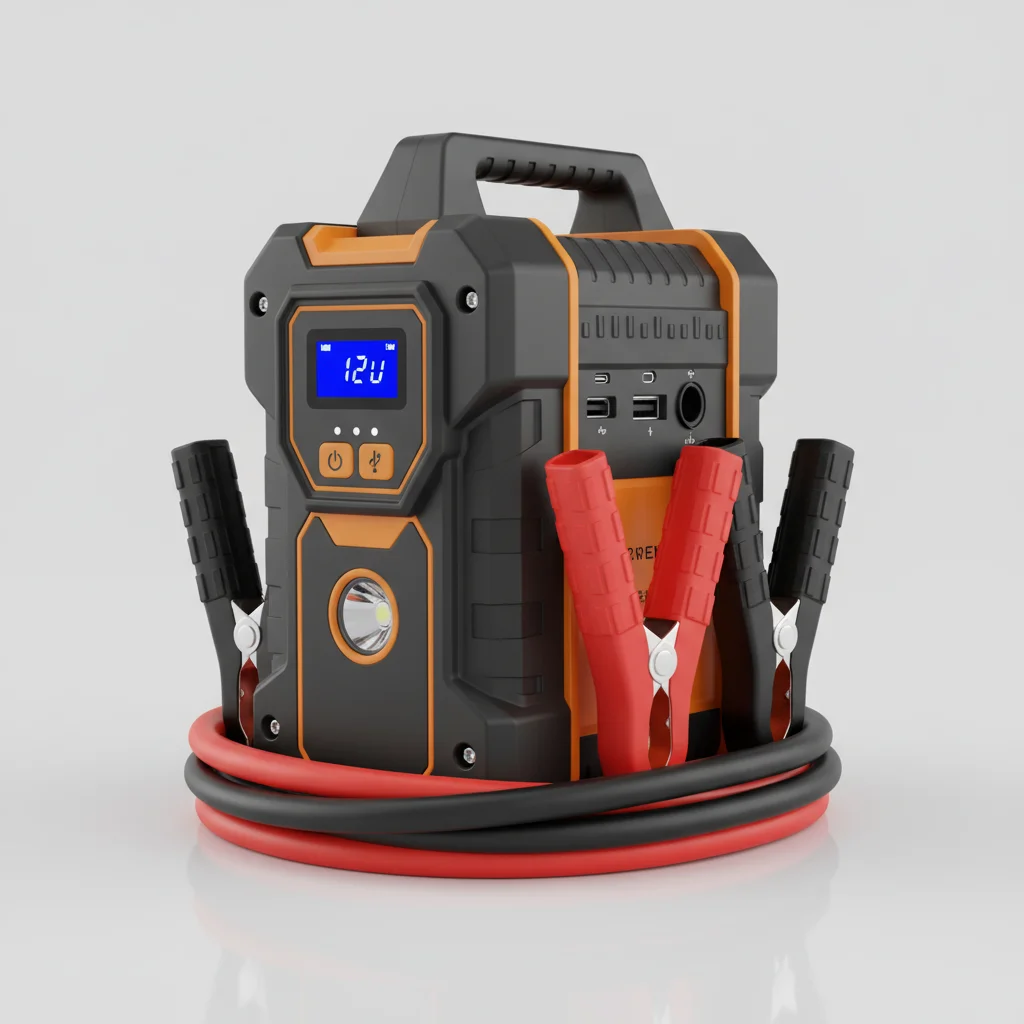
When selecting a jump starter for your car, the voltage requirement is straightforward: you need a 12-volt jump starter. Almost all passenger cars, light trucks, and SUVs operate on a 12-volt electrical system. While some heavy-duty commercial vehicles might use 24-volt systems, these are rare for personal use vehicles. Understanding this fundamental voltage ensures you choose a compatible and effective device for your vehicle’s needs.
Understanding Your Car’s Electrical System
Modern passenger vehicles are designed around a 12-volt battery, which powers everything from the starter motor to the headlights and infotainment system. This standard has been in place for decades due to its efficiency and reliability for automotive applications. A jump starter must match this voltage to safely and effectively deliver the necessary power to a dead battery. Using a jump starter with an incorrect voltage could damage your vehicle’s electrical components.
Why 12 Volts is Standard for Most Vehicles
The 12-volt system provides a good balance between power delivery and component size. Higher voltages would require thicker insulation and larger components, increasing cost and weight. Lower voltages would necessitate higher currents to deliver the same power, leading to more heat generation and larger wiring. The 12-volt standard is a well-engineered compromise that has proven effective for the vast majority of personal vehicles on the road today.
What About 24-Volt Jump Starters?
While not common for personal cars, 24-volt jump starters do exist and are specifically designed for heavy-duty applications such as semi-trucks, buses, and some construction equipment. These vehicles often have two 12-volt batteries wired in series to achieve a 24-volt system, providing more power for larger engines and demanding electrical loads. If you own a standard car, you should never use a 24-volt jump starter, as it will likely cause severe damage to your vehicle’s electrical system.
Key Considerations Beyond Voltage
|
Our Picks for the Best Jump Starter in 2026
As an Amazon Associate I earn from qualifying purchases.
|
||
| Num | Product | Action |
|---|---|---|
| 1 | Tire Inflator Portable Air Compressor & Car Jump Starter, Cordless Air Pump with LED Light & Pressure Gauge for Auto,Motorcycles,Bikes,Balls. |

|
| 2 | KeenPower 6000A Super Capacitor Battery-Less Jump Starter, Built-in 6 * 3000F Supercapacitor, No Traditional Battery |
|
| 3 | ANCEL BS200 Super Starter - Permanent Connected Starting System with Super Capacitor, Car Battery Jump Booster & Health Monitor via App, -40℉~176℉ in-Cabin Jump Box for 3.0L Vehicles |
|
| 4 | Tire Inflator Portable Air Compressor with Digitally Display Pressure Gauge 20000mA, Car Air Compressor Pump with Jump Starter 150PSI, 14.8 V Car Battery Jump Starter Portable |
|
| 5 | Portable Car Jump Starter with Air Compressor for Emergencies,3000A Peak and 150 PSI Max,for 12L Gas & 10L Diesel Engines,LCD Display,LED Light |
|
| 6 | Roar Pedal Super Capacitor Jump Starter, No Need Pre-Charge No Battery 12V Portable Car Jump Starter for All 12V Gas and Diesel Car, Portable Jump Box with Display |
|
| 7 | NOCO Boost X GBX55: 1750A UltraSafe Jump Starter – 12V Lithium Battery Booster Pack, Portable Jump Box, Power Bank & Jumper Cables - for 7.5L Gas and 5.0L Diesel Engines |
|
| 8 | NOCO Boost X GBX155: 4250A UltraSafe Jump Starter – 12V Lithium Battery Booster Pack, Portable Jump Box, Power Bank & Jumper Cables - for 10.0L Gas and 8.0L Diesel Engines |
|
| 9 | Jump Starter with Air Compressor, 6000A 150PSI Car Battery Jump Starter (10.0 Gas/8.0L Diesel) Battery Jumper Starter Portable 12V Jump Box with Jumper Cables, LED Light, LED Display |
|
| 10 | Tire Inflator Portable Air Compressor, 12V Car Jump Starter, 150PSI & 28000mAh Air Pump with Air Blower, Digital Pressure Gauge and LED Light, Electric Air Pump for Car, Motorcycle, Balls, Bike Pump |
|
Beyond ensuring a 12-volt output, several other factors are crucial when choosing a jump starter. Peak amperage is vital, as it indicates the maximum current the device can deliver to crank a stubborn engine. Cold cranking amps (CCA) are also important, especially if you live in a colder climate, as batteries perform less efficiently in low temperatures. Battery capacity, often measured in milliamp-hours (mAh) or watt-hours (Wh), determines how many jump starts you can get on a single charge. Finally, safety features like reverse polarity protection and spark-proof clamps are essential for safe operation.
- Ensure the jump starter has at least 400-600 peak amps for most 4-cylinder cars.
- Look for models with built-in safety features such as reverse polarity and overcharge protection.
- Consider the battery capacity; a higher mAh rating means more jump starts per charge.
- Check for additional features like USB charging ports or an integrated air compressor.
- Read user reviews to gauge real-world performance and reliability.
For reliable 12-volt jump starters that offer excellent performance and safety features, consider options like the. This model is highly rated for its robust build and consistent power delivery, making it a great choice for everyday car owners. It provides ample cranking power for most standard vehicles and includes essential safety protocols to protect both the user and the vehicle.
Maintaining Your 12-Volt Jump Starter
Proper maintenance is key to ensuring your 12-volt jump starter is ready when you need it most. Always store it in a cool, dry place, away from extreme temperatures. Regularly check the charge level and recharge it according to the manufacturer’s recommendations, typically every 3-6 months, even if it hasn’t been used. Keeping the clamps clean and free of corrosion will also ensure a good connection when jump starting. Following these simple maintenance tips will extend the lifespan of your device and guarantee its readiness for emergencies.
When you’re ready to invest in a new jump starter, or upgrade your current one, explore models such as the. This particular unit is known for its compact design and powerful 12-volt output, making it an ideal companion for any car owner. Its user-friendly interface and durable construction ensure it will be a valuable tool for years to come, providing peace of mind on the road.

I picked up a jump starter for my light truck, making sure it was a 12-volt model. It works, but the clamps could be a bit sturdier. They feel a little cheap compared to the rest of the unit. It got the job done when my battery was dead, but I worry about their longevity.
I finally got around to buying one of these after my old battery died in a parking lot last month. It’s a 12-volt system for my SUV, just like it said, and this thing fired it right up. Super easy to use, even for someone like me who’s not super mechanically inclined. Definitely a lifesaver to have in the trunk.
This portable jump starter is pretty solid. I appreciate knowing that almost all passenger cars use a 12-volt system, so I didn’t have to overthink it. It’s compact and holds a charge well. My only minor gripe is the carrying case feels a little flimsy, but the unit itself is great.
I’m so glad I invested in one of these. Knowing that my car needs a 12-volt jump starter made the selection process much simpler. It’s given me so much peace of mind, especially since I often drive long distances. It’s a small price to pay for not getting stranded.