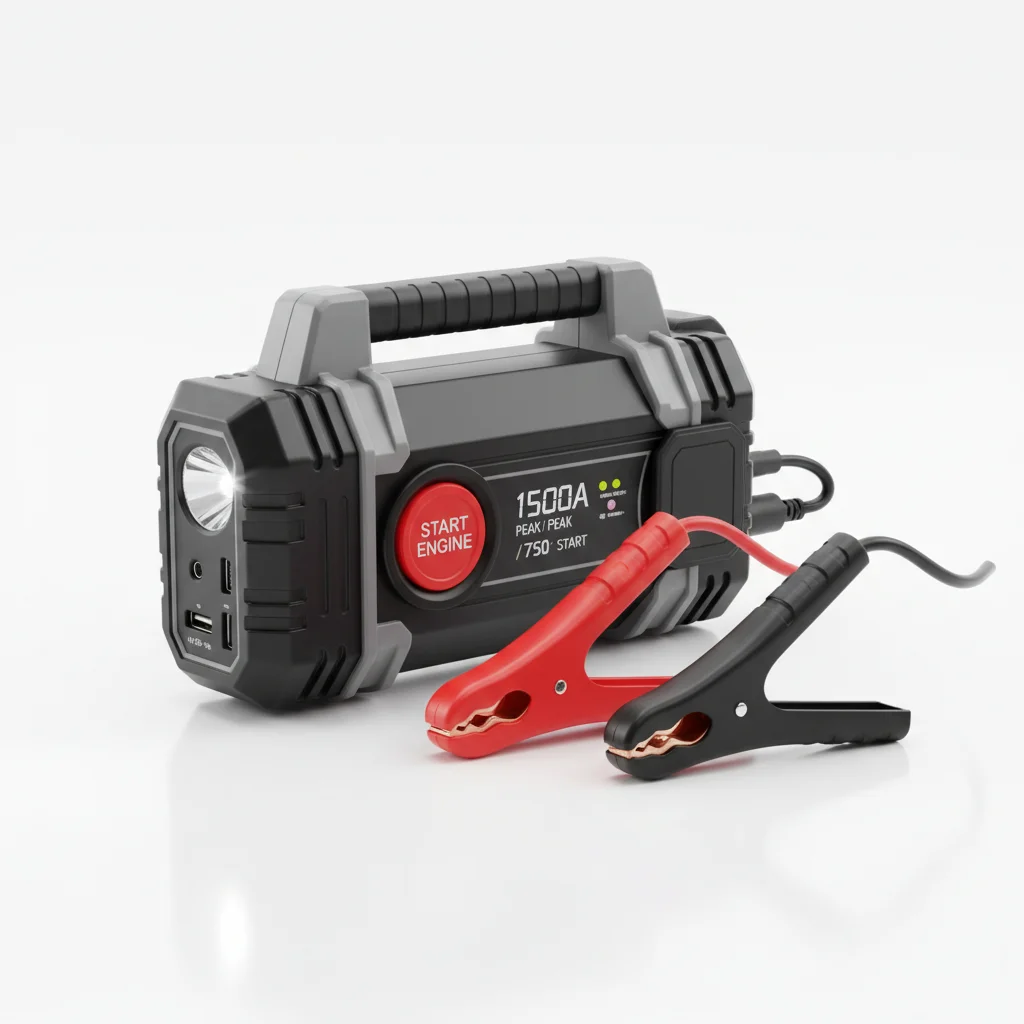
When selecting a jump starter for your car, the Cold Cranking Amps (CCA) rating is a critical factor, and for most standard passenger vehicles, you’ll need a jump starter with at least 400-600 CCA. This range provides sufficient power to reliably start engines in various conditions, including moderate cold. However, larger engines, diesel vehicles, or those in extremely cold climates may require higher CCA ratings, often exceeding 800 CCA.
Understanding Cold Cranking Amps (CCA)
Cold Cranking Amps (CCA) measure a battery’s ability to deliver current at 0°F (-18°C). Specifically, it’s the number of amperes a 12-volt battery can deliver for 30 seconds while maintaining at least 7.2 volts. This rating is crucial because cold temperatures significantly reduce a battery’s efficiency and increase the engine’s resistance to turning over. A higher CCA rating indicates a more powerful jump starter capable of overcoming these challenges.
It’s important not to confuse CCA with Peak Amps, which is often a much higher number advertised on jump starters. Peak Amps represent the maximum current a unit can deliver for a very short burst, typically milliseconds, and is less indicative of sustained starting power in cold conditions compared to CCA.
Matching CCA to Your Vehicle Type
The ideal CCA for your jump starter largely depends on your vehicle’s engine size and type. A compact sedan with a 4-cylinder engine will have different requirements than a large SUV with a V8 or a diesel truck. Generally, smaller gasoline engines require less CCA, while larger gasoline and all diesel engines demand significantly more.
- 4-Cylinder Gasoline Engines: 400-600 CCA is typically sufficient.
- 6-Cylinder Gasoline Engines: 600-800 CCA provides a good margin.
- 8-Cylinder Gasoline Engines: 800-1000+ CCA is recommended for reliable starts.
- Diesel Engines (all sizes): 1000-2000+ CCA, as diesel engines require much more power to crank.
Always check your vehicle’s owner’s manual or the existing battery’s specifications for its recommended CCA rating. Aim for a jump starter that meets or slightly exceeds this number for optimal performance.
Impact of Climate on CCA Needs
|
Our Picks for the Best Jump Starter in 2026
As an Amazon Associate I earn from qualifying purchases.
|
||
| Num | Product | Action |
|---|---|---|
| 1 | ANCEL BS200 Super Starter - Permanent Connected Starting System with Super Capacitor, Car Battery Jump Booster & Health Monitor via App, -40℉~176℉ in-Cabin Jump Box for 3.0L Vehicles |

|
| 2 | Roar Pedal Super Capacitor Jump Starter, No Need Pre-Charge No Battery 12V Portable Car Jump Starter for All 12V Gas and Diesel Car, Portable Jump Box with Display |
|
| 3 | Portable Car Jump Starter with Air Compressor for Emergencies,3000A Peak and 150 PSI Max,for 12L Gas & 10L Diesel Engines,LCD Display,LED Light |
|
| 4 | Tire Inflator Portable Air Compressor with Digitally Display Pressure Gauge 20000mA, Car Air Compressor Pump with Jump Starter 150PSI, 14.8 V Car Battery Jump Starter Portable |
|
| 5 | Jump Starter with Air Compressor, 6000A 150PSI Car Battery Jump Starter (10.0 Gas/8.0L Diesel) Battery Jumper Starter Portable 12V Jump Box with Jumper Cables, LED Light, LED Display |
|
| 6 | KeenPower 6000A Super Capacitor Battery-Less Jump Starter, Built-in 6 * 3000F Supercapacitor, No Traditional Battery |
|
| 7 | NOCO Boost X GBX55: 1750A UltraSafe Jump Starter – 12V Lithium Battery Booster Pack, Portable Jump Box, Power Bank & Jumper Cables - for 7.5L Gas and 5.0L Diesel Engines |
|
| 8 | Tire Inflator Portable Air Compressor & Car Jump Starter, Cordless Air Pump with LED Light & Pressure Gauge for Auto,Motorcycles,Bikes,Balls. |
|
| 9 | NOCO Boost X GBX155: 4250A UltraSafe Jump Starter – 12V Lithium Battery Booster Pack, Portable Jump Box, Power Bank & Jumper Cables - for 10.0L Gas and 8.0L Diesel Engines |
|
| 10 | Tire Inflator Portable Air Compressor, 12V Car Jump Starter, 150PSI & 28000mAh Air Pump with Air Blower, Digital Pressure Gauge and LED Light, Electric Air Pump for Car, Motorcycle, Balls, Bike Pump |
|
The climate in which you operate your vehicle plays a significant role in determining the necessary CCA. In regions with consistently mild temperatures, a jump starter on the lower end of the recommended CCA range for your vehicle might suffice. However, if you live in an area prone to harsh winters and sub-zero temperatures, investing in a jump starter with a higher CCA rating is a wise decision.
Cold weather not only reduces battery performance but also thickens engine oil, increasing the resistance the starter motor must overcome. A jump starter with ample CCA ensures that your engine receives the necessary burst of power to turn over even in freezing conditions, preventing frustrating delays.
Features to Consider Beyond CCA
While CCA is a primary consideration, other features enhance the utility and safety of a jump starter. Look for models with built-in safety features such as reverse polarity protection, spark-proof clamps, and overcharge protection. These features safeguard both the jump starter and your vehicle’s electrical system from potential damage during use.
Additionally, consider the portability and extra functionalities. Many modern jump starters include USB ports for charging mobile devices, LED flashlights, and even air compressors for inflating tires. These multi-functional devices offer greater value and preparedness for various roadside emergencies.For heavy-duty use, consider models with robust construction and durable clamps.
Maintaining Your Jump Starter for Optimal Performance
Even the most powerful jump starter won’t perform optimally if not properly maintained. Regular charging is crucial, as most portable jump starters use lithium-ion or lead-acid batteries that can self-discharge over time. Store your jump starter in a cool, dry place, away from extreme temperatures, to preserve its battery life and readiness.
Periodically inspect the clamps and cables for any signs of wear or damage. Clean any corrosion from the clamps to ensure a good electrical connection. Following these simple maintenance tips will ensure your jump starter is ready to provide the necessary CCA when you need it most, helping you avoid being stranded with a dead car battery.

I finally got around to buying a jump starter after my old battery died on me in a parking lot. This guide really helped me understand the CCA ratings. I went with one that had 600 CCA, and it’s been perfect for my sedan. Super easy to use and gives me peace of mind knowing I won’t be stranded again.
This was such a helpful breakdown of why CCA matters, especially for cold weather. I live in a place where it gets really cold, and my car struggles sometimes. I made sure to get a jump starter with a high CCA rating, and it’s been a lifesaver. No more waiting for roadside assistance!
I’ve had a portable jump starter for a while, but I never really understood the Cold Cranking Amps until now. Mine is around 500 CCA, which is good for my small SUV. It’s saved me a few times already. The only thing is the clamps feel a little flimsy, but they get the job done.
I drive a diesel truck and was looking for something powerful. While the info on needing over 800 CCA for larger engines was spot on, I found that many of the recommended models in that range were pretty expensive. I ended up getting a cheaper one that’s just okay, but I probably should have splurged for the higher CCA.