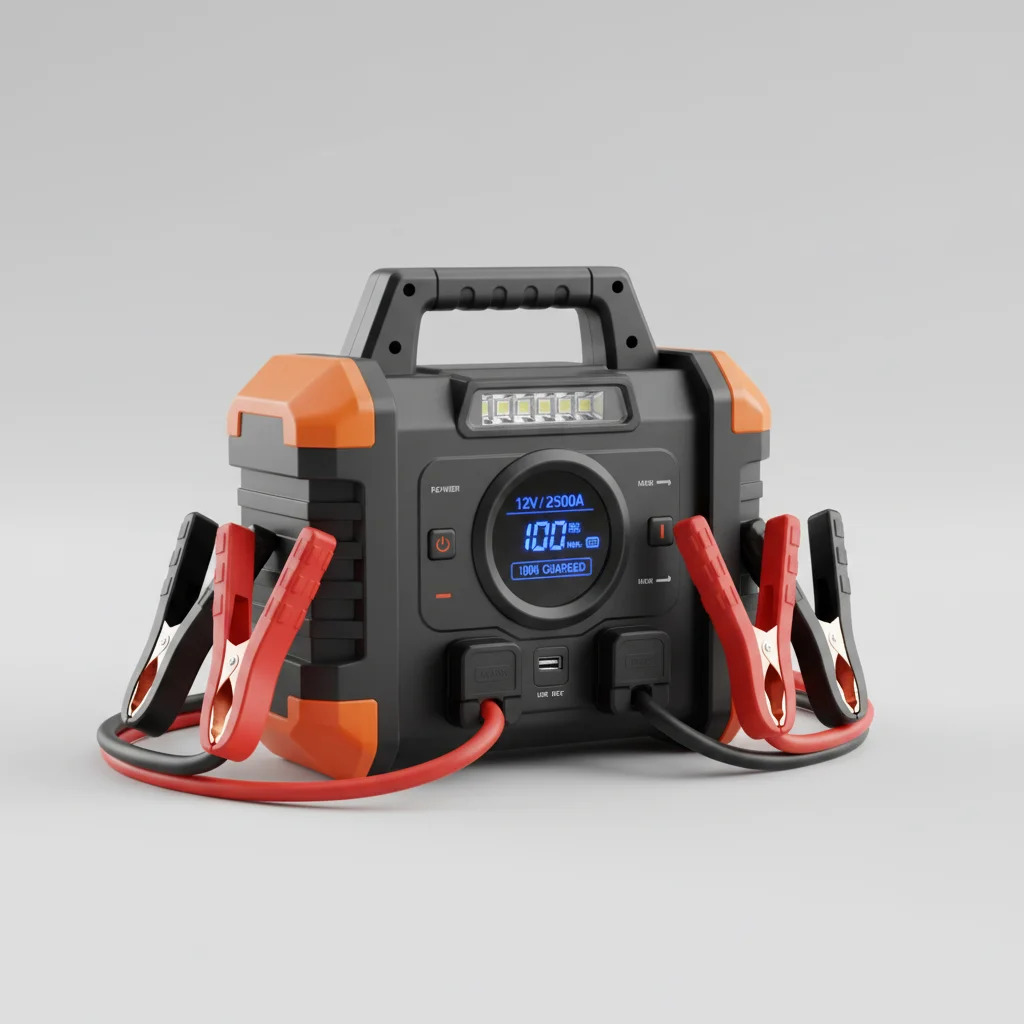
Choosing the right jump starter for your RV is crucial for roadside emergencies. For most RVs, you’ll need a jump starter with a peak amperage of at least 1500-2000 amps to reliably start a dead battery. This range accommodates the larger battery banks and engine sizes commonly found in Class A, B, and C motorhomes, as well as travel trailers with auxiliary power systems.
Understanding RV Battery Systems
RVs typically utilize complex electrical systems, often featuring both a chassis battery (for starting the engine) and house batteries (for powering living amenities). While house batteries are usually deep-cycle and not designed for high cranking amps, a dead chassis battery is the primary concern for a jump starter. The size and type of your RV’s engine, whether gasoline or diesel, will significantly influence the required jump starter power. Diesel engines, in particular, demand much higher cranking amps due to their compression ratios. For automotive emergency buying guides on this site.
Factors to Consider When Sizing Your Jump Starter
Several factors play into selecting the appropriate jump starter. First, check your RV’s engine displacement and battery CCA (Cold Cranking Amps) rating. A good rule of thumb is to aim for a jump starter with peak amps at least equal to, or preferably higher than, your battery’s CCA. Second, consider the climate you’ll be traveling in; colder temperatures reduce battery efficiency and increase the demand on a jump starter. Third, think about the frequency of use and the convenience features you desire, such as built-in air compressors or USB charging ports.
Recommended Amperage Ranges for Different RV Types
|
Our Picks for the Best Jump Starter in 2026
As an Amazon Associate I earn from qualifying purchases.
|
||
| Num | Product | Action |
|---|---|---|
| 1 | Tire Inflator Portable Air Compressor & Car Jump Starter, Cordless Air Pump with LED Light & Pressure Gauge for Auto,Motorcycles,Bikes,Balls. |

|
| 2 | ANCEL BS200 Super Starter - Permanent Connected Starting System with Super Capacitor, Car Battery Jump Booster & Health Monitor via App, -40℉~176℉ in-Cabin Jump Box for 3.0L Vehicles |
|
| 3 | NOCO Boost X GBX55: 1750A UltraSafe Jump Starter – 12V Lithium Battery Booster Pack, Portable Jump Box, Power Bank & Jumper Cables - for 7.5L Gas and 5.0L Diesel Engines |
|
| 4 | Jump Starter with Air Compressor, 6000A 150PSI Car Battery Jump Starter (10.0 Gas/8.0L Diesel) Battery Jumper Starter Portable 12V Jump Box with Jumper Cables, LED Light, LED Display |
|
| 5 | Tire Inflator Portable Air Compressor, 12V Car Jump Starter, 150PSI & 28000mAh Air Pump with Air Blower, Digital Pressure Gauge and LED Light, Electric Air Pump for Car, Motorcycle, Balls, Bike Pump |
|
| 6 | Tire Inflator Portable Air Compressor with Digitally Display Pressure Gauge 20000mA, Car Air Compressor Pump with Jump Starter 150PSI, 14.8 V Car Battery Jump Starter Portable |
|
| 7 | KeenPower 6000A Super Capacitor Battery-Less Jump Starter, Built-in 6 * 3000F Supercapacitor, No Traditional Battery |
|
| 8 | NOCO Boost X GBX155: 4250A UltraSafe Jump Starter – 12V Lithium Battery Booster Pack, Portable Jump Box, Power Bank & Jumper Cables - for 10.0L Gas and 8.0L Diesel Engines |
|
| 9 | Roar Pedal Super Capacitor Jump Starter, No Need Pre-Charge No Battery 12V Portable Car Jump Starter for All 12V Gas and Diesel Car, Portable Jump Box with Display |
|
| 10 | Portable Car Jump Starter with Air Compressor for Emergencies,3000A Peak and 150 PSI Max,for 12L Gas & 10L Diesel Engines,LCD Display,LED Light |
|
The ideal jump starter amperage varies by RV class. For smaller Class B camper vans or gasoline Class C RVs, a 1500-2000 peak amp unit is often sufficient. Larger Class A gasoline motorhomes or smaller diesel RVs might require 2000-3000 peak amps. For heavy-duty diesel Class A motorhomes or those with multiple large batteries, a jump starter with 3000-4000+ peak amps is highly recommended to ensure reliable starting power. Always err on the side of more power rather than less.
- Class B Camper Vans: 1500-2000 Peak Amps
- Class C Gasoline RVs: 1500-2500 Peak Amps
- Class A Gasoline Motorhomes: 2000-3000 Peak Amps
- Small Diesel RVs: 2500-3500 Peak Amps
- Large Diesel Class A Motorhomes: 3500-4000+ Peak Amps
Essential Features for RV Jump Starters
Beyond raw power, look for features that enhance usability and safety for RV applications. Long, heavy-gauge cables are essential to reach batteries that may be less accessible. Reverse polarity protection and spark-proof technology are critical safety features. A durable, weather-resistant casing is also beneficial for outdoor use. Consider units with multiple charging options, including AC and DC, to keep your jump starter ready for action. Some models also offer advanced battery monitoring and diagnostic capabilities.
When you’re out on the open road, a reliable jump starter is an invaluable tool. Investing in a unit that matches or exceeds your RV’s power requirements will provide peace of mind and prevent being stranded. Always keep your jump starter fully charged and stored in an easily accessible location within your RV.Many RV owners also find it beneficial to carry a portable air compressor for tire maintenance, and some jump starters integrate this feature.Regular maintenance of your RV’s batteries, including checking water levels and terminal cleanliness, will also extend their life and reduce the need for jump starts.

As a full-timer, a reliable jump starter is non-negotiable. I appreciated the breakdown of how engine size, especially for diesel, impacts the power needed. I picked up a heavy-duty model and it’s already saved me once when my chassis battery died unexpectedly. Great to have that kind of backup.
I’ve got a Class A motorhome and was always worried about getting stranded. This guide really helped me understand the difference between chassis and house batteries. I ended up getting a 2000-amp unit, and it’s given me so much peace of mind. Totally worth the investment for those long trips.
The advice about needing at least 1500 amps for most RVs was spot on. My only minor complaint is that it didn’t really touch on the charging time for these units. I wish there was a bit more detail on how long it takes to fully charge them up before a trip. Still, it’s a solid piece of gear to have.
Good info on the peak amperage. I have a Class C and was debating between a 1500 and 2000 amp starter. Went with the higher end just to be safe, especially since I have a diesel engine. It’s a bit bulkier than I expected, but it works like a charm. Haven’t had to use it yet, thankfully, but it’s good to know it’s there.