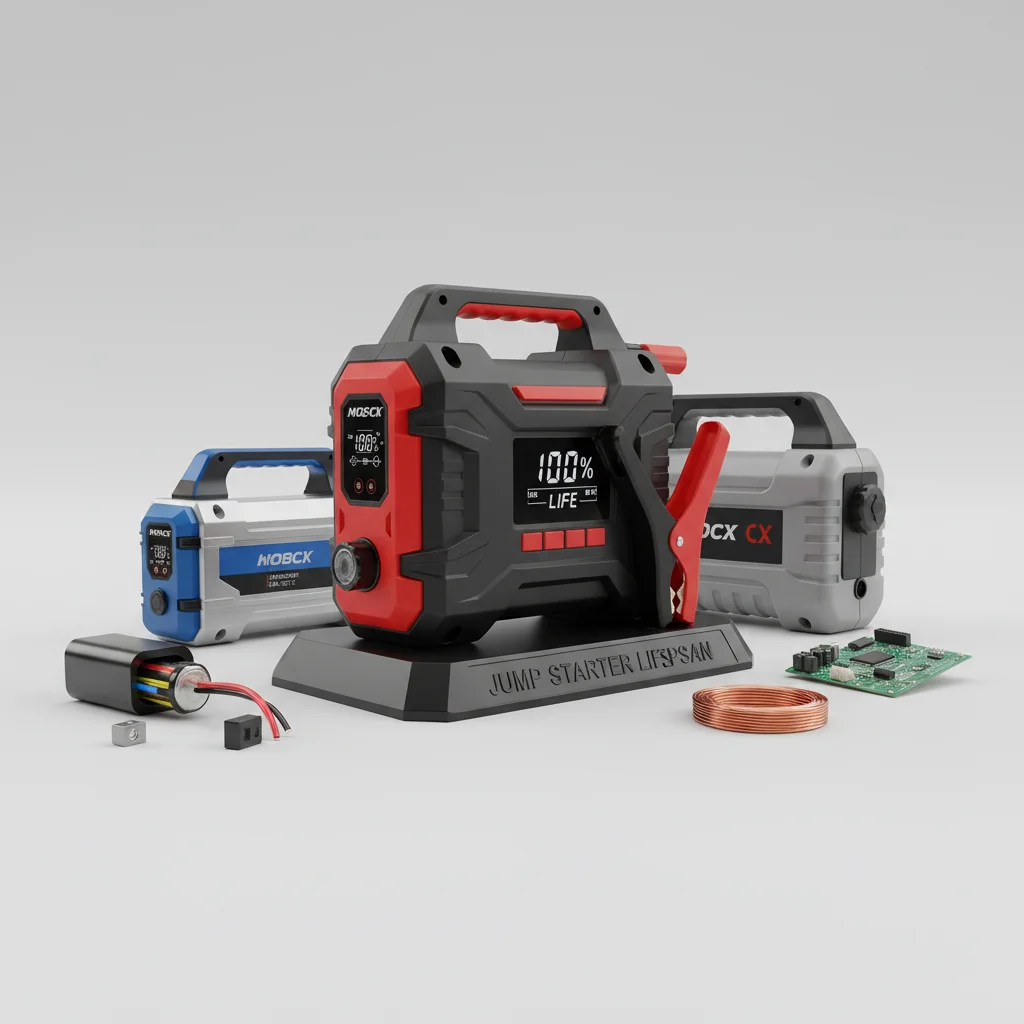
The typical lifespan of a portable jump starter is between 3 to 7 years, though this can vary significantly based on battery type, usage frequency, and maintenance. Lithium-ion jump starters, which are increasingly popular, generally offer a longer cycle life compared to older lead-acid models, often exceeding 500 charge cycles. Understanding these factors helps maximize your device’s operational life and ensures it’s ready when needed.
Factors Influencing Jump Starter Longevity
Several key factors dictate how long your jump starter will remain effective. The type of battery chemistry is paramount; lithium-ion batteries inherently have a greater number of charge cycles than lead-acid batteries. Beyond chemistry, how often you use the device plays a significant role. Frequent, deep discharges can accelerate wear, while occasional use with proper charging in between can extend its life. Environmental conditions, such as extreme temperatures during storage, can also degrade battery performance over time.
Maximizing Your Jump Starter’s Life Through Proper Charging
Proper charging is perhaps the most critical aspect of extending your jump starter’s lifespan. For lithium-ion models, it’s best to keep the charge level between 50% and 80% when storing for extended periods, rather than fully charged or completely depleted. Overcharging or allowing the battery to drain to zero can cause irreversible damage. Most manufacturers recommend charging your jump starter every 3 to 6 months, even if it hasn’t been used, to maintain optimal battery health. Always use the charger provided by the manufacturer or a compatible replacement to avoid damaging the internal circuitry.
Storage Best Practices for Extended Durability
|
Our Picks for the Best Jump Starter in 2026
As an Amazon Associate I earn from qualifying purchases.
|
||
| Num | Product | Action |
|---|---|---|
| 1 | Tire Inflator Portable Air Compressor & Car Jump Starter, Cordless Air Pump with LED Light & Pressure Gauge for Auto,Motorcycles,Bikes,Balls. |

|
| 2 | Portable Car Jump Starter with Air Compressor for Emergencies,3000A Peak and 150 PSI Max,for 12L Gas & 10L Diesel Engines,LCD Display,LED Light |
|
| 3 | Tire Inflator Portable Air Compressor, 12V Car Jump Starter, 150PSI & 28000mAh Air Pump with Air Blower, Digital Pressure Gauge and LED Light, Electric Air Pump for Car, Motorcycle, Balls, Bike Pump |
|
| 4 | NOCO Boost X GBX55: 1750A UltraSafe Jump Starter – 12V Lithium Battery Booster Pack, Portable Jump Box, Power Bank & Jumper Cables - for 7.5L Gas and 5.0L Diesel Engines |
|
| 5 | Roar Pedal Super Capacitor Jump Starter, No Need Pre-Charge No Battery 12V Portable Car Jump Starter for All 12V Gas and Diesel Car, Portable Jump Box with Display |
|
| 6 | NOCO Boost X GBX155: 4250A UltraSafe Jump Starter – 12V Lithium Battery Booster Pack, Portable Jump Box, Power Bank & Jumper Cables - for 10.0L Gas and 8.0L Diesel Engines |
|
| 7 | Tire Inflator Portable Air Compressor with Digitally Display Pressure Gauge 20000mA, Car Air Compressor Pump with Jump Starter 150PSI, 14.8 V Car Battery Jump Starter Portable |
|
| 8 | ANCEL BS200 Super Starter - Permanent Connected Starting System with Super Capacitor, Car Battery Jump Booster & Health Monitor via App, -40℉~176℉ in-Cabin Jump Box for 3.0L Vehicles |
|
| 9 | Jump Starter with Air Compressor, 6000A 150PSI Car Battery Jump Starter (10.0 Gas/8.0L Diesel) Battery Jumper Starter Portable 12V Jump Box with Jumper Cables, LED Light, LED Display |
|
| 10 | KeenPower 6000A Super Capacitor Battery-Less Jump Starter, Built-in 6 * 3000F Supercapacitor, No Traditional Battery |
|
Where and how you store your jump starter can significantly impact its longevity. Extreme temperatures, both hot and cold, are detrimental to battery health. Storing your device in a cool, dry place, away from direct sunlight and moisture, is ideal. Avoid leaving it in a vehicle during scorching summers or freezing winters for prolonged periods. Additionally, ensure the jump starter is clean and free of debris, and periodically check the cables and clamps for any signs of wear or corrosion. Proper storage not only preserves the battery but also protects the external components.
- Store in a cool, dry environment (ideally 50-70°F).
- Avoid direct sunlight and extreme temperature fluctuations.
- Keep charge level between 50-80% for long-term storage.
- Clean terminals and cables regularly.
- Inspect for physical damage before and after each use.
Recognizing When Your Jump Starter Needs Replacement
Even with the best care, jump starters eventually reach the end of their useful life. Signs that your device may need replacement include a significant decrease in its ability to hold a charge, a noticeable reduction in cranking power, or an inability to jump-start a vehicle that it previously handled with ease. Swelling of the battery casing, unusual odors, or excessive heat during charging are also critical indicators of internal battery failure and warrant immediate replacement. Ignoring these signs can lead to unreliable performance when you need it most, or even safety hazards. Consider upgrading to a newer model like thefor enhanced reliability and features.
The Role of Technology in Jump Starter Evolution
Advancements in battery technology have dramatically improved the lifespan and performance of modern jump starters. Older lead-acid units were bulky and had a limited number of cycles, often requiring more frequent replacement. Today’s lithium-ion jump starters are not only more compact and powerful but also boast sophisticated battery management systems (BMS) that protect against overcharging, over-discharging, and short circuits. These intelligent systems contribute significantly to extending the overall lifespan of the device, making them a more reliable long-term investment. For a durable and feature-rich option, check out the.
Frequently Asked Questions
What is the average lifespan of a portable jump starter?
The average lifespan of a portable jump starter is typically between 3 to 7 years. This duration is influenced by factors such as the battery type (lithium-ion vs. lead-acid), how frequently it's used, and the quality of maintenance it receives.
How does battery type affect a jump starter's longevity?
Battery type significantly affects longevity; lithium-ion jump starters generally offer a longer cycle life, often exceeding 500 charge cycles, compared to older lead-acid models. Lithium-ion batteries are more resilient to repeated charging and discharging.
What are the best charging practices to extend jump starter life?
To extend jump starter life, keep lithium-ion models charged between 50% and 80% for extended storage. Avoid overcharging or completely depleting the battery. Most manufacturers recommend charging every 3 to 6 months, even if unused, to maintain optimal battery health.
Where should I store my jump starter for maximum durability?
For maximum durability, store your jump starter in a cool, dry place, ideally between 50-70u00b0F, away from direct sunlight and moisture. Extreme temperatures, both hot and cold, are detrimental to battery health and should be avoided.
What are the signs that a jump starter needs to be replaced?
Signs that a jump starter needs replacement include a significant decrease in its ability to hold a charge, reduced cranking power, or an inability to jump-start vehicles it previously handled. Swelling of the battery casing, unusual odors, or excessive heat during charging also indicate internal battery failure.

I appreciate knowing about the 500 charge cycles for lithium-ion batteries. I’ve been tracking my usage and it helps me understand what to expect. It’s a solid piece of gear to have in the trunk, especially for peace of mind on longer trips.
This information about battery type and maintenance is super helpful. I just got a new portable jump starter and I want to make sure it lasts. I’ll definitely be more diligent about keeping it properly charged to get the full 7 years out of it.
Mine only lasted about 3 years before it wouldn’t hold a charge anymore. It was a lead-acid model, so maybe that’s why. I used it pretty often for my older car, so I guess the frequent discharges really took a toll. Wish it had lasted a bit longer.
I’ve had my lithium-ion jump starter for about 4 years now, and it’s still going strong. I make sure to charge it every few months, even if I haven’t used it. It’s saved me a few times when I left my lights on. Definitely worth investing in a good quality one.