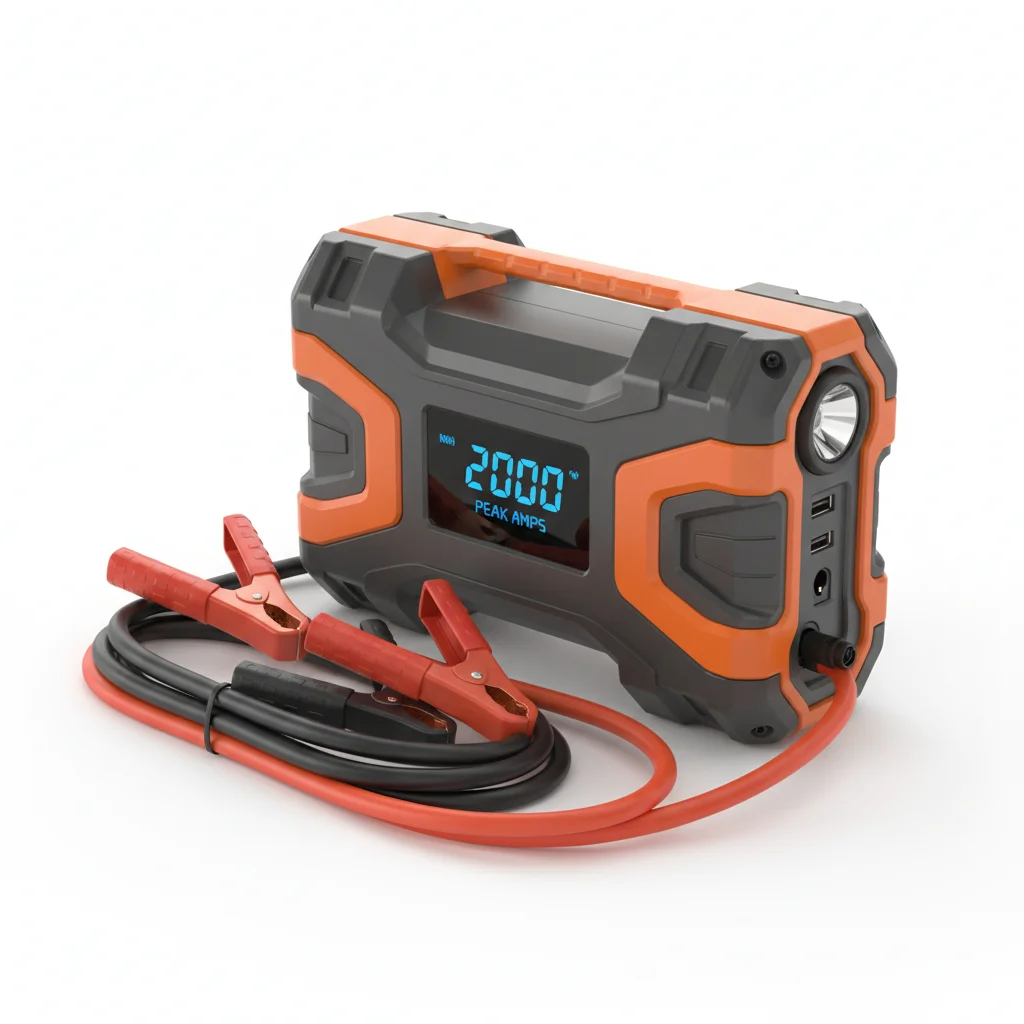
For most standard passenger cars, a jump starter with 400-600 peak amps is sufficient, while larger engines like those in trucks or SUVs may require 800-1000 peak amps or more. The specific amperage needed depends on your vehicle’s engine size, battery condition, and the ambient temperature. Understanding these factors ensures you select a jump starter capable of reliably starting your vehicle.
Understanding Peak Amps vs. Cranking Amps
When evaluating jump starters, you’ll often see two key specifications: peak amps and cranking amps (or starting amps). Peak amps represent the maximum current a jump starter can deliver in a very short burst, typically for a fraction of a second. Cranking amps, on the other hand, indicate the sustained power the unit can provide for a longer duration, usually around 30 seconds, which is more representative of the actual power needed to turn over an engine. While peak amps can be a good indicator of raw power, cranking amps often provide a more practical measure of a jump starter’s effectiveness.
For reliable starting, especially in challenging situations, prioritize a jump starter with higher cranking amps. Many manufacturers will list both, but focusing on the cranking amp rating will give you a better sense of its real-world performance. A good rule of thumb is to look for a unit with at least 200-300 cranking amps for smaller vehicles and 400-600 cranking amps for larger ones.
Factors Influencing Amperage Needs
Several factors dictate how many amps your jump starter should provide. The most significant is your vehicle’s engine size. Smaller 4-cylinder engines require less power than large V8 or diesel engines. The condition of your vehicle’s battery also plays a role; a completely dead battery will demand more power than one that is merely weak. Additionally, cold weather significantly increases the resistance within a battery, meaning more amperage is required to turn over the engine in freezing temperatures. Consider your typical driving environment and the climate you live in when making your selection.
Recommended Amperage for Different Vehicle Types
|
Our Picks for the Best Jump Starter in 2026
As an Amazon Associate I earn from qualifying purchases.
|
||
| Num | Product | Action |
|---|---|---|
| 1 | Roar Pedal Super Capacitor Jump Starter, No Need Pre-Charge No Battery 12V Portable Car Jump Starter for All 12V Gas and Diesel Car, Portable Jump Box with Display |

|
| 2 | NOCO Boost X GBX155: 4250A UltraSafe Jump Starter – 12V Lithium Battery Booster Pack, Portable Jump Box, Power Bank & Jumper Cables - for 10.0L Gas and 8.0L Diesel Engines |
|
| 3 | KeenPower 6000A Super Capacitor Battery-Less Jump Starter, Built-in 6 * 3000F Supercapacitor, No Traditional Battery |
|
| 4 | Portable Car Jump Starter with Air Compressor for Emergencies,3000A Peak and 150 PSI Max,for 12L Gas & 10L Diesel Engines,LCD Display,LED Light |
|
| 5 | Tire Inflator Portable Air Compressor with Digitally Display Pressure Gauge 20000mA, Car Air Compressor Pump with Jump Starter 150PSI, 14.8 V Car Battery Jump Starter Portable |
|
| 6 | Tire Inflator Portable Air Compressor & Car Jump Starter, Cordless Air Pump with LED Light & Pressure Gauge for Auto,Motorcycles,Bikes,Balls. |
|
| 7 | NOCO Boost X GBX55: 1750A UltraSafe Jump Starter – 12V Lithium Battery Booster Pack, Portable Jump Box, Power Bank & Jumper Cables - for 7.5L Gas and 5.0L Diesel Engines |
|
| 8 | Tire Inflator Portable Air Compressor, 12V Car Jump Starter, 150PSI & 28000mAh Air Pump with Air Blower, Digital Pressure Gauge and LED Light, Electric Air Pump for Car, Motorcycle, Balls, Bike Pump |
|
| 9 | ANCEL BS200 Super Starter - Permanent Connected Starting System with Super Capacitor, Car Battery Jump Booster & Health Monitor via App, -40℉~176℉ in-Cabin Jump Box for 3.0L Vehicles |
|
| 10 | Jump Starter with Air Compressor, 6000A 150PSI Car Battery Jump Starter (10.0 Gas/8.0L Diesel) Battery Jumper Starter Portable 12V Jump Box with Jumper Cables, LED Light, LED Display |
|
The ideal amperage varies widely depending on the type of vehicle you drive. Here’s a general guideline:
- Small Cars (4-cylinder): 400-600 peak amps / 200-300 cranking amps
- Mid-size Cars & Small SUVs (6-cylinder): 600-800 peak amps / 300-400 cranking amps
- Large SUVs & Light Trucks (V8): 800-1200 peak amps / 400-600 cranking amps
- Heavy-Duty Trucks & Diesel Engines: 1200-2000+ peak amps / 600-1000+ cranking amps
Always check your vehicle’s owner’s manual for specific recommendations, as some manufacturers provide guidance on minimum starting current.
Choosing the Right Jump Starter for Your Needs
Beyond just amperage, consider other features when selecting a jump starter. Portability, battery capacity (measured in mAh or Wh), and additional functionalities like USB charging ports, LED flashlights, or air compressors can enhance its utility. A higher capacity battery will allow for multiple jump starts on a single charge, which is beneficial for frequent use or emergencies. Look for safety features such as reverse polarity protection, spark-proof clamps, and overcharge protection to ensure safe operation. Investing in a jump starter that slightly exceeds your minimum amperage requirements can provide a valuable buffer, especially as the unit ages or in extreme conditions.
Maintaining Your Jump Starter for Optimal Performance
To ensure your jump starter is ready when you need it, proper maintenance is essential. Regularly check the charge level and recharge it according to the manufacturer’s instructions, typically every 3-6 months, even if it hasn’t been used. Store it in a cool, dry place, away from extreme temperatures. Inspect the clamps and cables for any signs of wear or damage before each use. A well-maintained jump starter will provide reliable service for years, making it a valuable addition to your emergency roadside kit.
Frequently Asked Questions
What is the difference between peak amps and cranking amps?
Peak amps represent the maximum current a jump starter can deliver in a very short burst, typically for a fraction of a second. Cranking amps, on the other hand, indicate the sustained power the unit can provide for a longer duration, usually around 30 seconds, which is more representative of the actual power needed to turn over an engine.
How many peak amps does a small car typically need?
A small car with a 4-cylinder engine typically needs a jump starter with 400-600 peak amps. This range provides sufficient power to start most compact and subcompact vehicles effectively.
What amperage is recommended for large SUVs and light trucks?
Large SUVs and light trucks with V8 engines generally require a jump starter with 800-1200 peak amps and 400-600 cranking amps. This higher power ensures reliable starting, especially in challenging conditions.
Does cold weather affect jump starter amperage requirements?
Yes, cold weather significantly increases the resistance within a battery, meaning more amperage is required to turn over the engine in freezing temperatures. Consider your climate when selecting a jump starter.
How often should I recharge my jump starter for optimal performance?
You should regularly check the charge level and recharge your jump starter according to the manufacturer's instructions, typically every 3-6 months, even if it hasn't been used. This ensures it's ready when an emergency arises.

This was super informative! I never knew how much the ambient temperature affected battery performance and jump starter needs. I live in a cold climate, so knowing I needed something more robust than just the basic 400-amp option was crucial. My new jump starter has already saved me once this season.
I found the advice about larger engines needing 800-1000 peak amps helpful for my truck. The unit I bought does the job, but the clamps feel a little flimsy compared to my old one. It’s a minor complaint, but something to consider if you’re using it frequently. Still, it gets my diesel going.
I always wondered about the difference between peak amps and cranking amps. This really cleared it up for me. I ended up getting a unit with 800 peak amps for my SUV, and it’s been a lifesaver. Started my car right up last winter when the battery died in the cold. Definitely recommend understanding these specs before buying.
Great info on choosing the right jump starter. I drive a standard sedan and was debating between a 400 or 600 peak amp model. Went with the 600 just to be safe, and it’s worked perfectly every time I’ve needed it. It’s compact and easy to keep in the trunk. No more waiting for roadside assistance!